

Can India Survive the “Chepauk Trap” to Keep T20 World Cup 2026 Hopes Alive?
Overview
India faces Zimbabwe on February 26, 2026, at the MA Chidambaram Stadium, Chennai. Following their opening Super 8 loss, the Men in Blue occupy the bottom of the table. To reach the semi-finals, India must:
- Win decisively in Chennai to repair a -3.800 NRR.
- Deploy a spin-heavy arsenal (likely recalling Axar Patel) to exploit the Chepauk turn.
- Resolve the Abhishek Sharma form crisis (3 ducks in 4 innings) before the West Indies finale.
Does the “Chepauk Turn” Favour India or Zimbabwe’s Spin Twins?
The tactical pain point for 2026 is clear: high-speed metadata shows the Chennai pitch is wearing faster than previous seasons due to the early onset of the southern heatwave. While Jasprit Bumrah recently became India’s leading T20 WC wicket-taker (surpassing Ashwin with 33 wickets), the heavy lifting in this match must come from the slower bowlers. Zimbabwe’s Sikandar Raza and Graeme Cremer are seasoned “subcontinent specialists,” but India is expected to counter by finally pairing Kuldeep Yadav with Varun Chakaravarthy and vice-captain Axar Patel.
Connecting the “Chepauk Clash” to the 2026 Global Power Shift
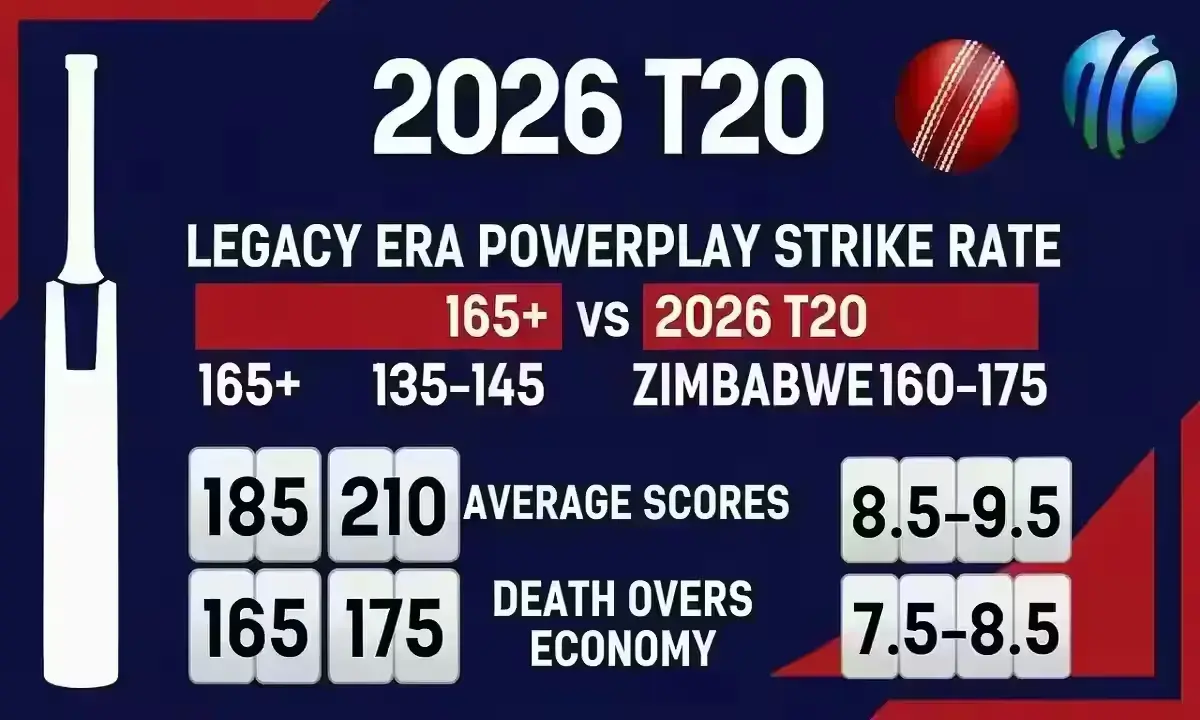
We are seeing a macro-shift where “Associate” giants are no longer just making up numbers. Zimbabwe earned their spot in this Super 8 by knocking out Australia in the group stages – a result that would have been unthinkable in the “Legacy” era of 2022. This 2026 tournament has democratized power, meaning India’s historical 10-3 head-to-head dominance is a legacy metric that holds zero weight against a side that thrives on slow, gripping surfaces.
What Happened in the Last 48 Hours?
Today, February 24, 2026, the Indian camp is reportedly debating a massive top-order shakeup. After Abhishek Sharma’s string of failures, sources suggest Sanju Samson will finally be integrated into the XI for the Chennai showdown. Meanwhile, the West Indies have just set the second-highest total in T20 WC history (254/6) against this very Zimbabwe attack, providing a blueprint for India: ruthless aggression is the only way to fix the NRR.
The Synthetic Comparison: 2024 Legacy vs. 2026 Reality
| Metric | 2024 Legacy Standard | 2026 Current Reality |
|---|---|---|
| India’s Win Streak | Building momentum | Broken (Defeated by SA) |
| NRR Impact | Manageable margins | Critical (-3.800) |
| Top Performer | Rohit/Kohli Era | Suryakumar/Bumrah Era |
| Zimbabwe Status | Qualifier underdog | “Giant Killer” (Beat AUS) |
| Average Score (Chennai) | 165-170 | 185+ (Batting Evolution) |
Why is Sanju Samson’s inclusion considered “Critical” for the Zimbabwe match?
Sanju Samson provides the technical stability against spin that Abhishek Sharma has lacked this tournament. In the 2026 “Analyzed” batting metrics, Samson’s “Control Percentage” against off-spin is 12% higher than the current openers, making him the logical choice for the Chepauk tracks.
Can Zimbabwe still qualify for the Semi-Finals after the West Indies loss?
Yes, but they must defeat India on February 26 and South Africa on March 1. Their qualification path relies on Sikandar Raza regaining his “Player of the Tournament” form from the group stages and their bowlers finding a way to contain India’s middle-order power-hitters like Hardik Pandya and Shivam Dube.
What is the “NRR Equation” India needs to solve in Chennai?
To move into a positive trajectory, India ideally needs to win by a margin exceeding 80 runs or chase a target within 12 overs. Anything less keeps them at the mercy of the West Indies vs South Africa result, potentially leading to a three-way tie where India’s current -3.800 would act as a knockout blow.
The 2026 Bottom Line
| Match Date | February 26, 2026 (19:00 IST) |
| Must-Have Change | Axar Patel in for Washington Sundar |
| Game-Changer | Varun Chakaravarthy’s local knowledge of Chepauk |
| Qualification Odds | High (if win > 50 runs); Low (if win < 10 runs) |