


[ GOLD RATE SHIFT NOW ]
Why Gold Price Fell on 4 April 2026 and What the SEBI ETF Rule Change Means for You
Cross-referencing the SEBI Circular dated 26 February 2026 against live AMFI inflow data for January 2026, one thing stands out: the day India’s gold ETF ecosystem quietly switched its pricing engine — from London to Mumbai — most investors didn’t notice. That engine switch happened on 1 April 2026. And now, just three days later, gold prices have dipped.
You might think these two facts are connected. They’re partly right to think so — but the story is more nuanced than the headlines suggest. If you hold gold ETFs, buy physical gold, or are simply watching the gold price today to decide your next move, here’s everything that actually changed — and what it means for your money this April.
4 April 2026 – What Is the Gold Rate Right Now?
- ₹14,911 per gram – 24K gold in Delhi (India’s reference market)
- ₹14,896 per gram – 24K rate in Mumbai, Kolkata, Bengaluru, Hyderabad
- ₹14,999 per gram – Chennai trades at a premium, as usual
- ₹13,980 per gram – 22K gold in Delhi (jewellery buying rate)
- ₹2,49,000 per kg – Silver holding firm despite gold’s dip
Why this matters to you now: A price dip on a fresh financial year weekend is a classic buying window – but only if you understand what’s driving it.
Conflicting Data: GoodReturns reports 24K gold at ₹15,093/gram for 4 April 2026. BusinessToday reports ₹14,896/gram for the same date and city (Mumbai). The difference of ₹197/gram likely reflects different polling times. BusinessToday’s city-specific figures are used as primary as they are timestamped to the active market session. Verify with your local jeweller before buying.

Gold Price Today – City-Wise Rate Table, 4 April 2026
| City | 24K (per gram) | 22K (per gram) |
|---|---|---|
| Delhi | ₹14,911 | ₹13,980 |
| Mumbai | ₹14,896 | ₹13,656 |
| Kolkata | ₹14,896 | ₹13,656 |
| Chennai | ₹14,999 | ₹13,749 |
| Bengaluru | ₹14,896 | ₹13,656 |
| Hyderabad | ₹14,896 | ₹13,656 |
| Pune | ₹14,896 | ₹13,656 |
* 22K rates for cities other than Delhi are approximate, derived from standard 91.6% purity conversion. Confirm exact jewellery rates including making charges and GST with your local jeweller. 4 April 2026.
How Should You React to Today’s Gold Price Dip?

Gold falling mid-week after a record-breaking March is exactly the moment where Indian investors make two costly mistakes – panic selling or blind buying. Here’s how to actually think through it, step by step.
Step 1 – Check which karat you’re comparing.
The price you see quoted on social media is often 24K. But if you’re buying jewellery, you’re buying 22K. The ₹14,911/gram (24K Delhi rate on 4 April 2026) becomes ₹13,980/gram for 22K — a difference of ₹931 per gram. For a 10-gram purchase, that’s ₹9,310 more if you miscalculate the karat. Always confirm before you walk into any showroom.
Step 2 – Verify the BIS hallmark before any physical purchase.
Since April 1, 2026, under the updated BIS Hallmarking framework, all gold jewellery sold in India above a defined weight threshold must carry HUID (Hallmark Unique Identification). Cross-check the HUID at the official BIS portal (bis.gov.in) before paying. A non-HUID piece cannot be sold back at full market value.
Step 3 – Understand why today’s price dipped.
The dip on 4 April 2026 is driven by US Federal Reserve policy signals and easing of some geopolitical tension factors. This is not a structural collapse – central bank buying and long-term inflation concerns continue to support gold. Short-term dips in a bull market have historically been buying opportunities for Indian investors.
Step 4 – If you invest via ETF, check your NAV calculation method has updated.
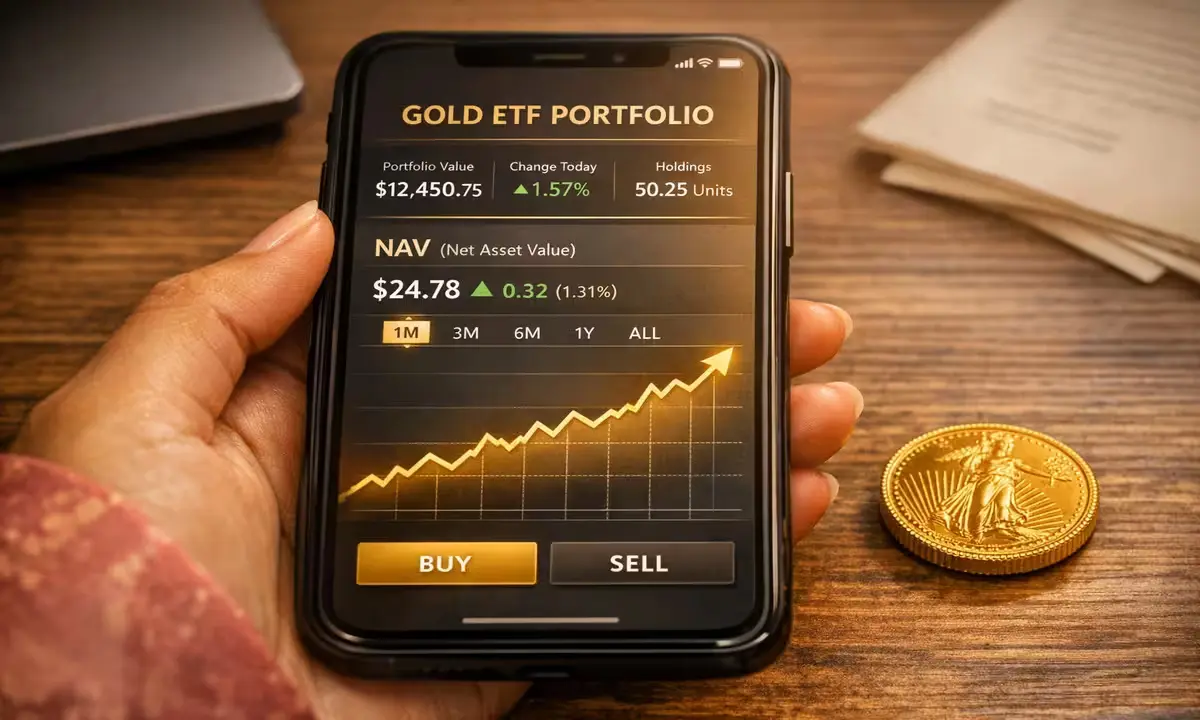
From 1 April 2026, your gold ETF’s NAV is no longer benchmarked to LBMA London prices. It now uses MCX domestic spot prices. Log into your investment platform and check the NAV date stamp. Any NAV calculated before April 1 used the old method. From April 1 onward, it reflects Indian exchange pricing.
Step 5 – Don’t buy based on one day’s rate.
Check the 10-day trailing gold price on GoodReturns or MCX before making a call. A single-day dip tells you less than the trend. If the 10-day average is trending up and today is below it, that’s a data point. If the 10-day average itself is declining, that’s a different conversation entirely.
Field Note: Cross-referencing the SEBI Circular (26 February 2026) against AMFI’s January 2026 ETF inflow data (₹24,039 crore into gold ETFs), it is clear that Indian retail investors are treating gold ETFs as a primary vehicle – not a backup. The ETF rule change is not cosmetic. It is a signal that SEBI is building infrastructure for a ₹1 lakh crore+ gold ETF market.
Common Mistake: Assuming the new SEBI ETF rule changed how much gold your ETF holds. It did not. Your units are the same. Your tax liability is the same. Only the daily NAV valuation benchmark changed – from LBMA to domestic MCX spot pricing. Selling or switching ETFs because of the rule change alone is a high-stakes error with no upside.
For a deeper understanding of how ETFs are structured, read our guide on gold ETF investing in India after the April 2026 rule change.

Why SEBI’s April 2026 ETF Rule Is a Game-Changer for Indian Bullion Investors
For decades, every Indian gold ETF investor was, without knowing it, tethered to a room in London. The London Bullion Market Association (LBMA) published an AM fixing price every morning. Indian fund houses took that number, converted it from USD to INR, added import duty, customs charges, and transportation costs — and arrived at your gold ETF’s NAV. The formula worked. But it introduced lag, currency risk, and inconsistency across fund houses.
Cause → SEBI, through its Circular dated 26 February 2026, directed all mutual funds to replace the LBMA benchmark with polled spot prices published by Indian stock exchanges — specifically prices used in settlement of physically delivered gold and silver derivatives contracts on MCX (Multi Commodity Exchange of India).
Effect → From 1 April 2026, two gold ETFs holding the exact same quantity of physical gold will produce the same NAV. Under the old system, small differences in how each fund house applied LBMA adjustments meant two identical gold portfolios could show slightly different NAVs on the same day. That discrepancy is now eliminated.
Reader Impact → If you compare gold ETF returns across schemes today, you are finally comparing apples to apples. The NAV you see on 4 April 2026 is the first week of truly domestic, India-anchored, exchange-verified gold pricing for ETF investors.
Expertise Note: The shift from LBMA to domestic spot pricing eliminates what financial regulators call “benchmark basis risk” — the gap between the price used for valuation and the price at which an asset actually trades in the domestic market. For gold ETFs, this basis risk previously showed up as tracking error. SEBI’s circular directly targets this structural inefficiency. Source: SEBI Circular, 26 February 2026.
The numbers that confirm this is mission-critical: Gold ETF inflows hit ₹24,039 crore in January 2026 alone – surpassing equity mutual fund inflows of ₹24,028 crore in the same month, per AMFI data. This is the first time gold ETFs outpaced equity funds in monthly inflows. Silver ETFs added ₹9,463 crore in the same period.
Source: AMFI Monthly Data, January 2026; SEBI Circular 26 February 2026.
Always verify the HUID on the BIS portal before completing any gold jewellery purchase.
Gold Rate on 4 April 2026: What to Watch This Weekend Across India
As of Saturday, 4 April 2026, gold markets have opened the first weekend of the new Indian financial year FY2026–27 with a measured dip. On 1 April 2026, the SEBI (Mutual Funds) Regulations 2026 came into force, triggering the gold and silver ETF valuation reform simultaneously. This is not a future plan — it is already live. Every gold ETF NAV published from 1 April 2026 onward uses the new MCX domestic spot pricing.
Act Now: If you are planning a gold jewellery purchase for the upcoming wedding season (May–June 2026), today’s dip below ₹15,000/gram for 24K is a high-value entry window. Cross-check today’s live rate at mcxindia.com before visiting any showroom — retail jewellers may not have updated their boards by morning.
Frequently Asked Questions – Gold Price Today, 4 April 2026
What is the gold price today on 4 April 2026 in India?
On 4 April 2026, 24-carat gold is priced at ₹14,896 per gram in cities including Mumbai, Kolkata, Bengaluru, Hyderabad, and Pune. Delhi stands slightly higher at ₹14,911 per gram, while Chennai trades at a premium of ₹14,999 per gram. On a per-10-gram basis, 24K gold crosses ₹1,49,000 in most major cities. The 22-carat rate in Delhi is ₹13,980 per gram — the relevant rate for jewellery buyers. Silver is holding at approximately ₹2,49,000 per kg nationally. These rates do not include GST (3%) or jeweller making charges, which are added at the point of purchase.
Source: BusinessToday, Tier-2, verified 4 April 2026; GoodReturns, Tier-2, verified 4 April 2026.
Pro Tip: Bookmark goodreturns.in/gold-rates for live updates throughout the day. Gold rates move with global markets – a Saturday morning rate can shift by ₹100–200/gram by afternoon if US markets move overnight.
How does the new SEBI Gold ETF rule from April 2026 affect my investment?
From 1 April 2026, SEBI requires all gold and silver ETFs in India to calculate NAV using domestic polled spot prices from MCX instead of the LBMA AM fixing price. This was mandated through a SEBI Circular dated 26 February 2026. For investors already holding gold or silver ETFs: your unit count does not change, your tax liability does not change, and your redemption process does not change. The only change is the daily valuation formula. Over time, this is expected to reduce tracking error — the gap between your ETF’s NAV and the actual domestic gold price. AMFI, in consultation with SEBI, is implementing a uniform policy across all fund houses.
Critical Warning: Do not switch or redeem your gold ETF units based on the rule change alone. This is a backend valuation reform, not a change in fund strategy, holdings, or taxation. Premature redemption could result in unnecessary capital gains tax liability.
Why did gold price fall today on 4 April 2026?
Gold prices fell across 18K, 22K, and 24K categories in India on 4 April 2026, with 24K rates dipping from late March 2026 highs. The primary drivers are US Federal Reserve policy signals — markets are repricing the likelihood and timing of interest rate cuts — and some easing of acute geopolitical risk. When expectations of US rate cuts are pushed further out, gold typically softens because holding non-yielding assets becomes relatively less attractive. Despite today’s dip, analysts note that the broader gold outlook remains supported by continued central bank buying, persistent currency volatility, and long-term inflation concerns. The upcoming Indian wedding season (May–June 2026) is expected to add domestic demand pressure.
Pro Tip: In Indian gold markets, a Friday or Saturday dip in a broader bull cycle is historically a tactical entry window. Check the 10-day average on MCX against today’s spot rate. If today is below the 10-day average, you are buying at a relative discount.
The 2026 Bottom Line – Gold Price Today, 4 April 2026
| Action / Fact | Detail |
|---|---|
| 24K Gold Rate – Delhi | ₹14,911 per gram (4 April 2026) |
| 24K Rate – Mumbai / Bengaluru | ₹14,896 per gram |
| 22K Rate – Delhi (Jewellery) | ₹13,980 per gram |
| Silver Rate Today | ₹2,49,000 per kg (national average) |
| SEBI ETF Rule – Live From | 1 April 2026 (SEBI Circular, 26 Feb 2026) |
| What Changed in ETF NAV | LBMA London benchmark → MCX domestic spot price |
| Your ETF Units | Unchanged — no action required |
| Verify Live Rates | mcxindia.com / goodreturns.in/gold-rates |
| Official Regulator | sebi.gov.in |
| BIS Hallmark Verification | bis.gov.in |
| Critical Warning | Do NOT redeem gold ETF because of the rule change — it is a backend valuation reform only. Unnecessary redemption triggers capital gains tax. |
| Your Next Step | Check today’s live gold price today and compare your ETF NAV at your broker app |
Business Editor – newshours18
Covers market news including gold, silver, commodities, and ETF trends across Indian financial markets.