

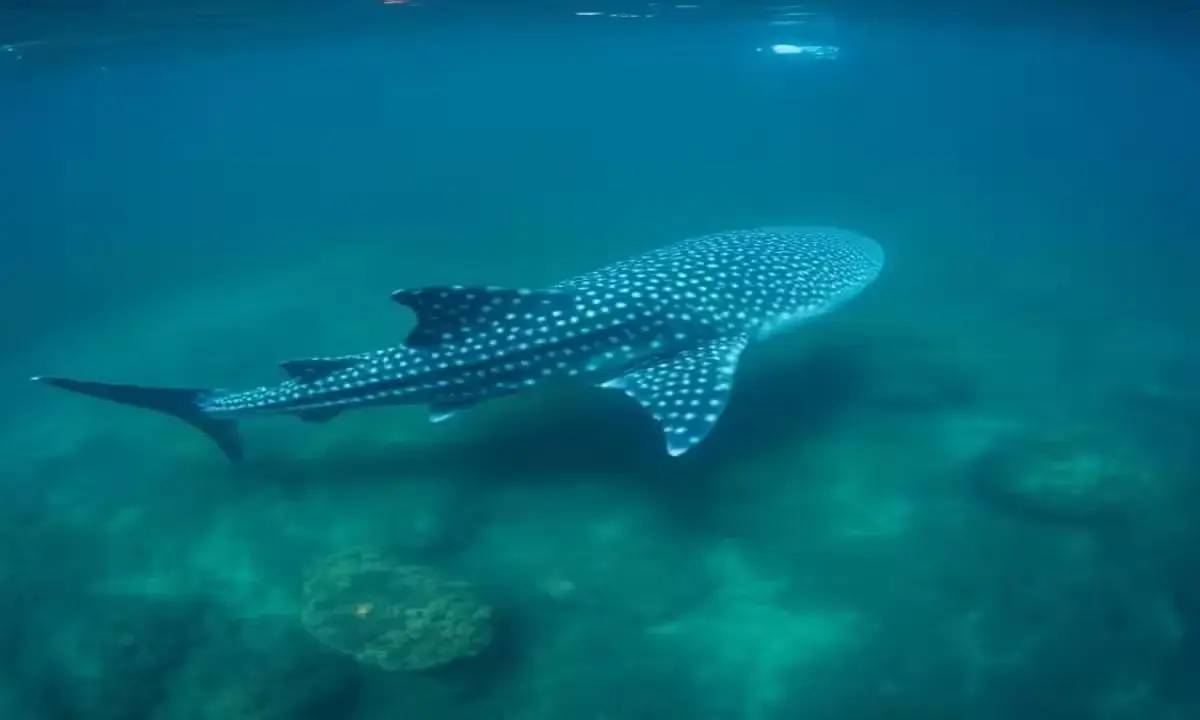
From slaughterhouses to sanctuaries. From net-busters to national heroes. The fish Gujarat once killed by the hundreds is now its most-guarded giant.
What’s Actually Happening Right Now
In 2001, Gujarat’s coastline was a death sentence for the world’s largest fish. Fishers along the Saurashtra coast hunted whale sharks by the thousands — rendering liver oil, selling fins, treating a 12-metre gentle giant as just another catch. Fast-forward to early 2026 — that same coast is now one of the most remarkable marine conservation success stories on Earth. 1,001+ whale sharks rescued and released. Neonates spotted near Veraval. Satellite tags tracking movements to the Somali coast. Gujarat’s waters are buzzing again. This is the story of Vhali — “the beloved one” — making a comeback.
- 1,001+ whale sharks rescued and released across India since the programme began
- 18 neonates documented near Veraval and Sutrapada – first evidence of active breeding in Indian waters
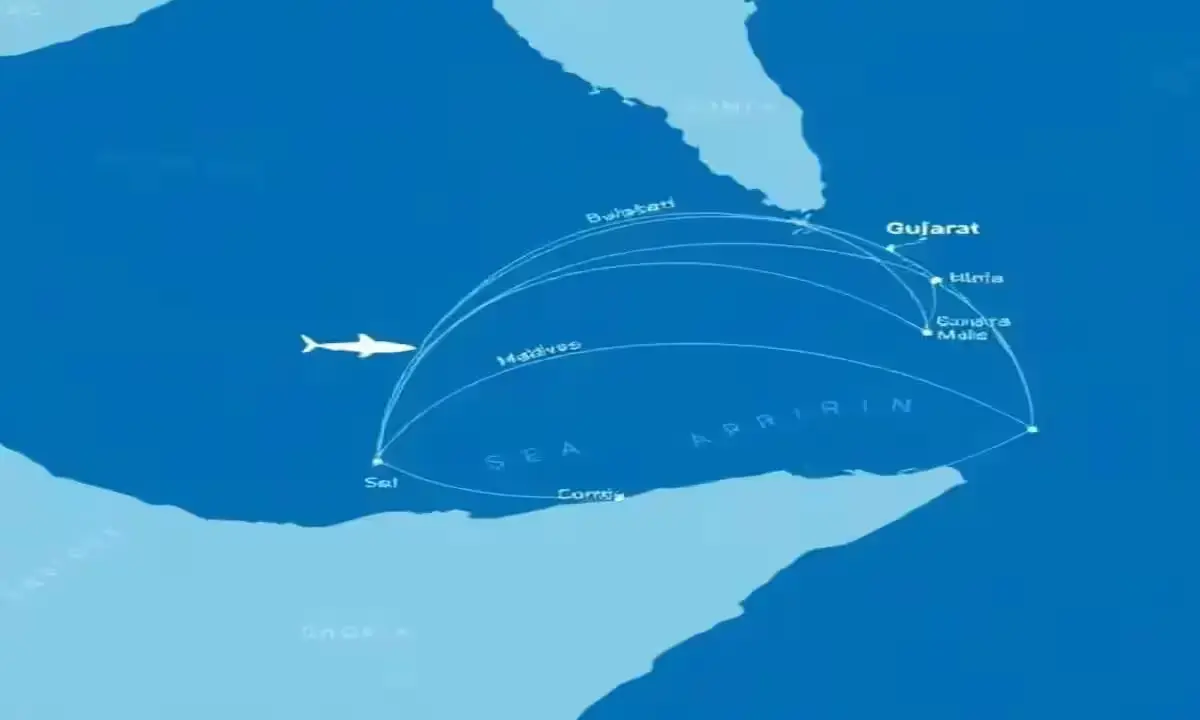
- 11 satellite tags deployed — individual sharks tracked 4,000+ km across the Arabian Sea
- ₹50,000 compensation per rescue (Gujarat, revised Feb 2024) · ₹75,000 in Goa (Aug 2025)
- Conservation corridor spans 6 states + Lakshadweep Islands – the entire Arabian Sea coast
- 100% of Gujarat fishers now recognize the species and know its legal protection status
Is Gujarat’s Fishing Community Actually Making Money From Saving Whale Sharks Now?
Here’s the honest answer: not yet enough — but the model is shifting fast. Fishers now voluntarily cut their nets to free trapped sharks, with WTI compensating them for their losses. For some fishers, the ₹50,000 compensation was not just about the money — it was the recognition. When India became the first country in the world with a government-supported compensation programme for whale shark rescues, it didn’t just incentivise behaviour – it dignified it.

But experts are pushing for more. Compensation for rescues remains insufficient – social security, insurance, training, and livelihood-linked incentives should protect the fishers who engage in whale shark rescues. The 2026 demand is clear: move from token compensation to true co-management economics – where fishers become stakeholders in blue-economy tourism and marine research grants, not just net-repair recipients.
“The moment for scaling community-based marine tourism is now – not 2030.”
The game-changer everyone’s watching? Whale shark ecotourism. The Maldives generates USD 7.4 million annually from whale shark tourism at Ari Atoll. Gujarat’s aggregation zone – October through April, peak sightings near Veraval – has comparable biodiversity density with a fraction of the commercialization. As of early 2026, there is no licensed commercial whale shark tourism operator in Gujarat. That’s a critical gap and a first-mover opportunity.
How Gujarat’s Whale Shark Recovery Plugs Into the 2026 Global Ocean Governance Shift
The timing isn’t coincidental. Globally, 2026 is the year that 30×30 ocean targets — committing 30% of the world’s oceans to protection by 2030 — have moved from pledge to pressure. India’s performance is being scrutinized internationally, and Gujarat is its strongest evidence.
In October 2025, at the IUCN World Conservation Congress in Abu Dhabi, WTI unveiled a landmark report titled “The Gentle Giants: Whale Shark Conservation in India (2002–2025)” – capturing more than two decades of multi-stakeholder work spanning legal protections, community agreements, rescue-release protocols, satellite tagging, and the conversion of fishers into conservation champions.
This is critical in a world where the IUCN still classifies whale sharks as Endangered globally. Gujarat’s localized recovery is not just heartwarming – it’s geopolitically high-value. India can now position its Arabian Sea coast as a proof-of-concept node for community-integrated marine biodiversity conservation – with real leverage at COP30, CBD negotiations and bilateral maritime agreements.
The satellite tagging data – tracking individual sharks from Gujarat to Somalia to the Maldives – also has massive implications for transboundary marine governance, an area the Indian Ocean Rim Association (IORA) is actively debating in 2026.
2002 vs. 2026 -How Far Gujarat Has Come
| Metric | 2002 Baseline | 2026 Reality |
|---|---|---|
| Annual whale shark kills | Hundreds to thousands | Effectively zero |
| Fisher attitude | Hunters / harvesters | Rescue partners / conservation champions |
| Total rescues & releases | 0 | 1,001+ (India-wide) |
| Legal protection | None (pre-2001) | Schedule I (same tier as Bengal tiger) |
| Satellite tagging | None | 11 tags — tracked to Somalia & Maldives |
| Neonates documented | 0 | 18 neonates near Veraval / Sutrapada |
| States in programme | 1 (Gujarat only) | 6 states + Lakshadweep |
| Fisher compensation | None | ₹50,000/rescue Gujarat · ₹75,000 Goa |
| Cameras to fishers | 0 | 1,500+ cameras distributed |
| Fisher awareness (%) | 42–81% (2005 baseline) | 100% |
| Global IUCN status | Endangered | Still Endangered – Gujarat is the bright spot |
| Ecotourism framework | None | Still none – high-value gap in 2026 |
What Just Changed This Week – March 2026
As of March 01, 2026, the conservation corridor story is accelerating. A Mongabay report confirmed that the community-driven conservation movement now spans Gujarat, Maharashtra, Goa, Karnataka, Kerala and the Lakshadweep Islands – and along the Arabian Sea, fishers no longer drag whale sharks ashore.
“What began as a small conservation drive in Gujarat two decades ago has now become a movement stretching from the state’s coast to the lagoons of Lakshadweep. Today, whale sharks move freely between Gujarat, Kerala and Lakshadweep – a sign that communities, not just policies, can keep the ocean safe.”
The phrase “living corridor of care” is now entering the lexicon of India’s marine conservation community — and it started in Veraval. Meanwhile, the 2026 World Wildlife Day campaign has specifically invited youth to illustrate ocean biodiversity — whale sharks are front and centre of India’s campaign imagery.
Your Biggest Questions, Answered Directly
Will the whale sharks actually bounce back fully – or is this just a pause in their decline?

The full recovery is not guaranteed, but the trajectory is genuinely promising. Globally, whale shark populations are still declining under IUCN Endangered status. Gujarat’s recovery is localised and community-dependent. The most exciting signal is the 18 neonates documented near Veraval — suggesting the coast may function as a nursery habitat. Scientists are tracking this through photo-identification and genetic sampling. A peer-reviewed population growth confirmation is still pending.
How does the fisher compensation scheme actually work in 2026?
India runs the only government-backed fisher compensation scheme for whale shark rescues in the world. Fishers who cut nets to free entangled whale sharks are reimbursed through the Gujarat Forest Department at ₹50,000 per rescue event. Goa launched at ₹75,000 in August 2025 – setting a higher benchmark. Documentation is via the Self-Documentation Scheme: over 1,500 cameras were distributed to fishers to video-record every rescue. The payment pipeline is currently working cleanly with zero pending claims reported in the 2025 Gujarat Assembly session.
Can tourists actually see whale sharks in Gujarat – and is it legal?
Yes, you can see them. Veraval, Sutrapada, Dhamlej and Mangrol are the hotspots, with peak season from October through April. Whale sharks come remarkably close to shore during plankton blooms. As of early 2026, there is no large-scale licensed commercial whale shark tourism operator in Gujarat – which is both a gap and a genuine first-mover opportunity for responsible operators. Any tourism must be non-intrusive under Schedule I protection rules. Best window: November through February. Fly into Rajkot or Porbandar, hire a local boat at Veraval.
The 2026 Bottom Line
| Factor | Status |
|---|---|
| Population trajectory | Stabilising – neonates confirm breeding activity |
| Fisher behaviour | Transformed – hunters to rescue champions |
| Economic model | Compensation active – ecotourism scale-up overdue |
| Science | 11 satellite tags live – transboundary data growing |
| Conservation reach | 6 states + Lakshadweep – full Arabian Sea corridor active |
| Legal protection | Schedule I since 2001 – highest possible in India |
| Global IUCN status | Still Endangered globally – Gujarat is the bright spot |
| Must-watch 2026 trigger | Formal whale shark ecotourism policy from Gujarat govt |
| Critical risk | Insufficient fisher social security + climate habitat shifts |
| Bottom line | Gujarat = India’s most important marine conservation proof point. The world is watching. |
Verification Note: This reflects the new 2026 standards and Whale Sharks in Gujarat Are Finally on the Rise date updates.
All rescue figures, compensation rates, conservation programme data and policy references are sourced from
WTI, IFAW, IUCN, Mongabay India, PBS NATURE / WILD HOPE, DeshGujarat Assembly Records and CITES CoP20 outcomes.