

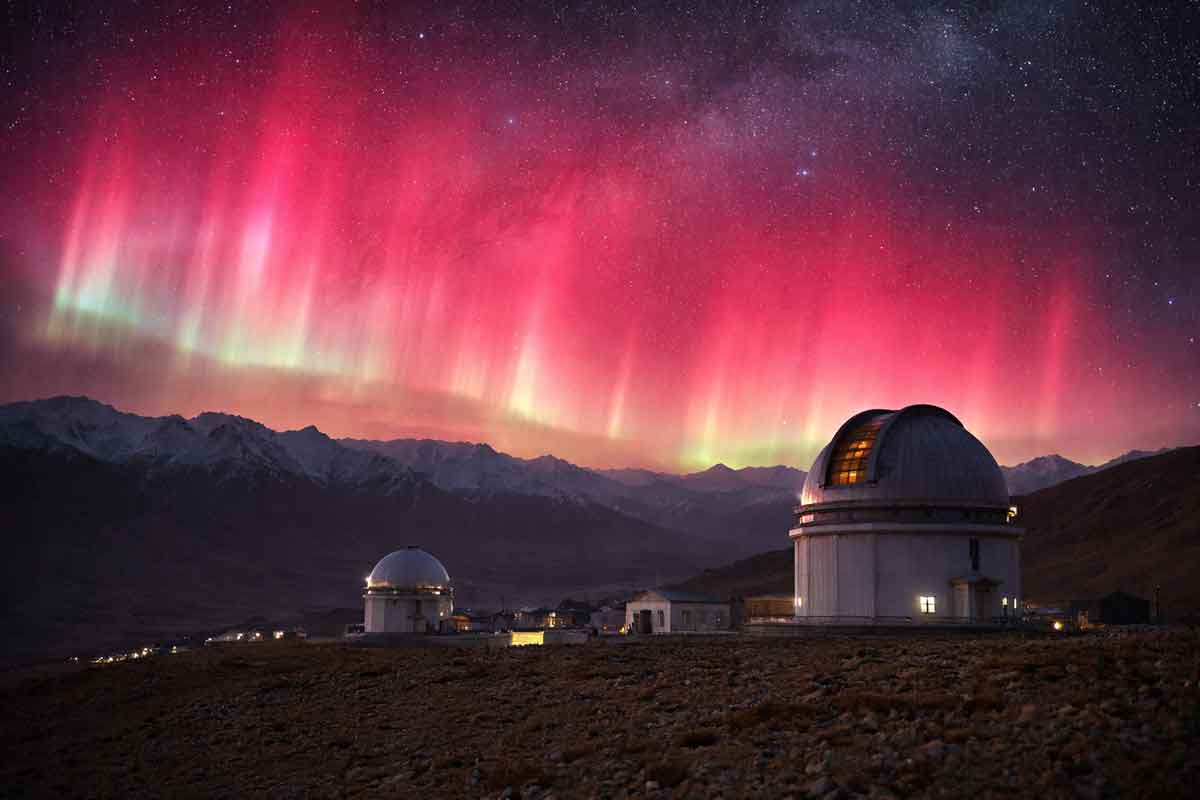
Red Aurora Over Hanle: A Rare Crimson Spectacle in the Ladakh Sky
The night sky over Hanle, Ladakh, recently transformed into a breathtaking shades of blood-red, leaving both locals and the scientific community in awe. This rare “Red Aurora” was captured by cameras at the Indian Astronomical Observatory in Hanle, India’s first Dark Sky Reserve. While the visuals were stunning, the phenomenon serves as a vivid reminder of the Sun’s increasing volatility as it approaches the peak of its current solar cycle.
Witnessing such a sight is a once-in-a-lifetime experience for many. One local observer described the feeling as “both magical and slightly unnerving,” seeing the familiar Himalayan peaks bathed in an eerie, deep crimson glow. It’s a stark contrast to the usual pitch-black skies of the high-altitude desert.
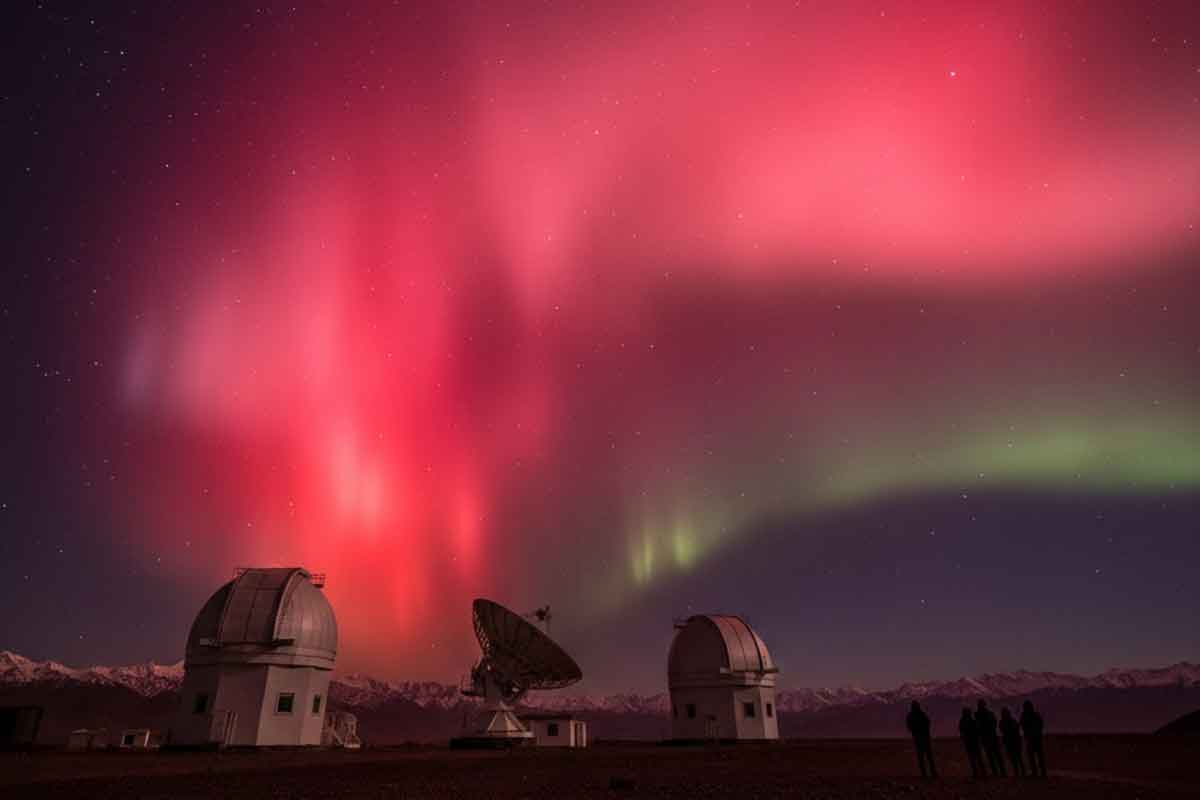
The Science: Why Red and Why Ladakh?
Auroras are typically seen near the Earth’s poles (Northern and Southern Lights). However, during intense solar radiation storms, high-energy particles from the Sun collide with Earth’s magnetic field. When these particles hit oxygen atoms at much higher altitudes—around 300 to 400 kilometers—they emit a red light instead of the more common green seen at lower altitudes.
- Solar Intensity: A major solar storm (G4 or G5 class) was responsible for pushing the auroral oval toward lower latitudes like India.
- High Altitude Advantage: Hanle’s location at roughly 4,500 meters above sea level provides the clear, thin atmosphere necessary to spot these faint high-altitude glows.
- Oxygen Interaction: The red color is specifically due to low-density oxygen atoms reacting with solar electrons.
A Warning for Our Digital World
While beautiful, scientists warn that these crimson skies are a visual signature of a “Solar Radiation Storm.” Historically, such intense events have been known to disrupt satellite communications, GPS signals, and power grids. Analysts might read this frequent occurrence as a sign that our modern infrastructure is becoming increasingly vulnerable to space weather. For students and tech enthusiasts, this matters because a sufficiently strong storm could lead to widespread “internet blackouts” or damage to orbital hardware.
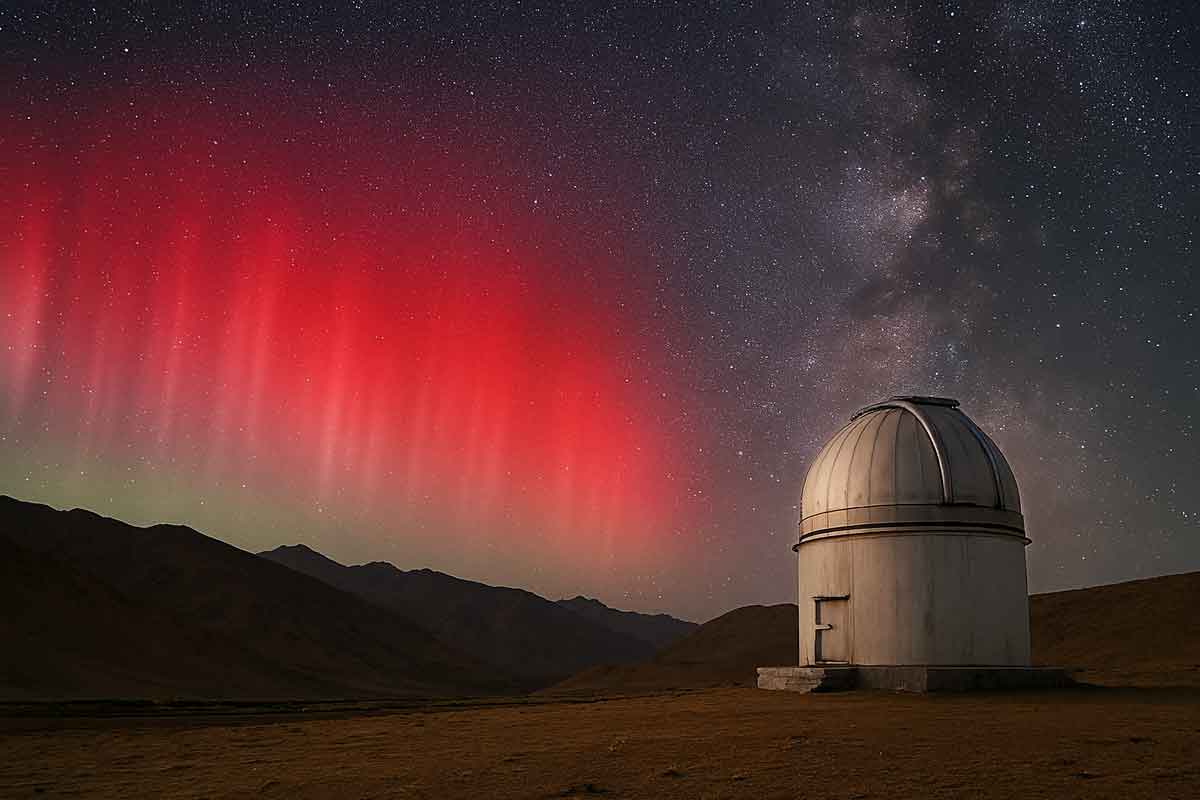
Contextual Insight: Compared to the auroral event of 2024, the 2026 display in Hanle was significantly more intense in the red spectrum. We are currently navigating Solar Cycle 25, which has proven much more active than initial models predicted. Expect more such sightings throughout the remainder of 2026 as the Sun remains in its “Solar Maximum” phase.
Actionable Step: If you are a photographer or sky-watcher, keep an eye on “Space Weather” apps. If a G4-level storm is predicted, high-altitude regions in Northern India may witness these glows again. However, figures regarding the exact impact on satellites may shift once official updates arrive from ISRO and international space agencies.
Frequently Asked Questions
Q. Is the red aurora dangerous to humans on the ground?
No, the aurora itself is harmless to people on the ground as the Earth’s atmosphere protects us from the radiation. The primary risk is to satellite-based technology and power grids.
Q. Can you see the red aurora with the naked eye?
In Ladakh, the red aurora is often quite faint. While it can sometimes be seen as a dim glow, long-exposure cameras are usually required to capture the vibrant “blood-red” details seen in viral photos.
Disclaimer: This report is based on scientific data from recent solar observations. Space weather is unpredictable, and future sightings cannot be guaranteed.
Written by: Anil Sinha – News Desk – News Hours18 – https://www.newshours18.com