


ISRO 2026: Navigating Innovation Amidst an Orbital Crisis
The Indian Space Research Organisation (ISRO) is currently standing at a high-stakes crossroads. While the agency is pushing into futuristic “deep-tech” frontiers like orbital data centers, it is simultaneously battling a string of high-profile launch failures. The recent crash of the PSLV-C62 in early 2026, which resulted in the loss of the EOS-N1 satellite and 15 other payloads, has put the spotlight back on the “reliable workhorse” of the Indian space program.
For many space enthusiasts, seeing a launch fail feels like a personal dent in national pride. However, inside the labs at Bengaluru, the focus has shifted toward Edge Computing in Space. The idea is to stop satellites from being simple cameras and turn them into autonomous servers that process data before it ever touches the ground. It is a bold “leapfrog” move that could redefine India’s digital infrastructure.
The Strategy: Why Move Data Centers to Space?
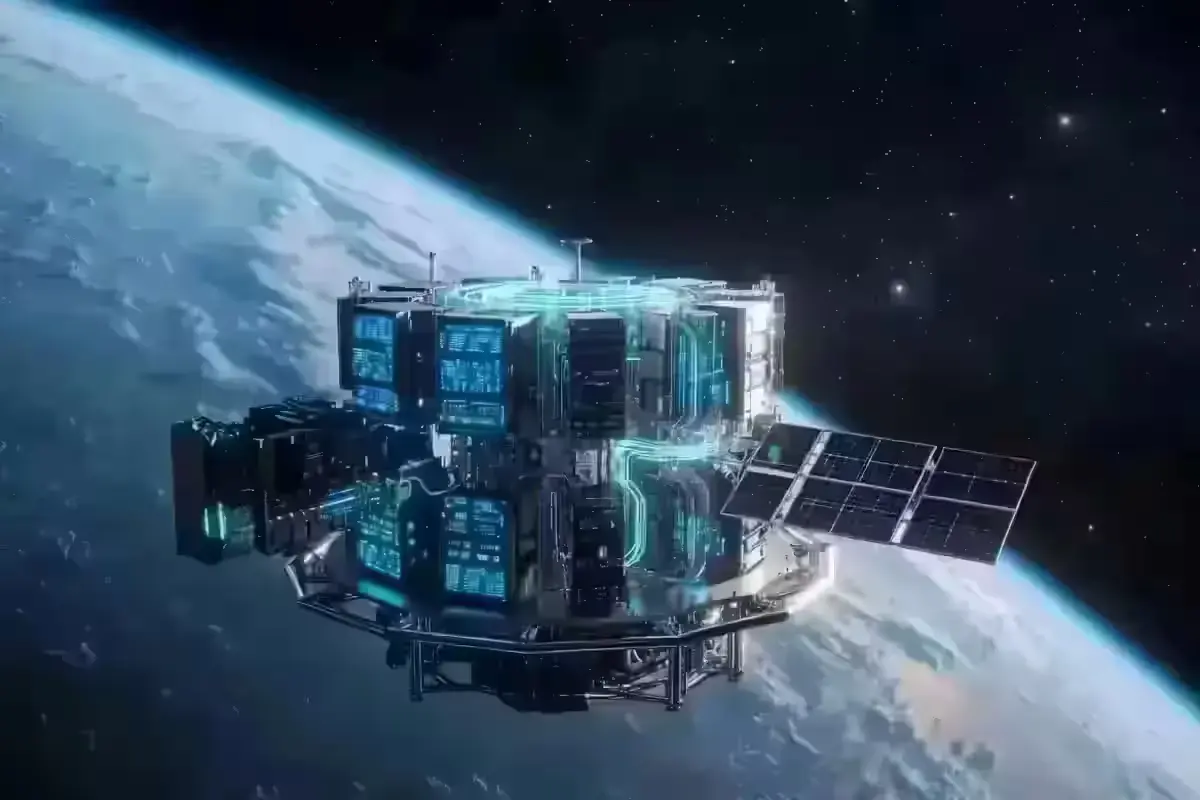
Traditional satellites face a “downlink bottleneck.” They capture massive amounts of high-resolution data but struggle to send it all back to Earth quickly due to limited bandwidth. By placing Data Centers in Space, ISRO intends to process this information in orbit. This means instead of sending a 10GB raw image of a forest fire, the satellite only sends a few kilobytes of text: “Fire detected at coordinates X, Y.”
- Latency Reduction: Instant processing for time-sensitive missions.
- Security: Data stored in orbit is physically inaccessible to terrestrial hackers.
- Sustainability: Space-based servers can theoretically use solar energy 24/7 without the massive cooling costs required on Earth.
ISRO’s Launch Performance & Tech Roadmap (2021-2026)
The following table illustrates the technical and financial turbulence ISRO has faced recently, contrasted with its upcoming technological milestones.
| Mission / Project | Status / Timeline | Outcome / Objective |
|---|---|---|
| PSLV-C62 | January 2026 | Failed (3rd Stage Anomaly); Loss of 16 satellites. |
| Space Data Center | Concept Phase (2026) | Orbital AI processing & Edge Computing. |
| GSLV-F15 | January 2025 | Partial Failure; Valve malfunction in orbit. |
| PSLV-C61 | May 2025 | Failed; Third-stage combustion drop. |
| Gaganyaan-1 | Late 2026 (Expected) | Uncrewed orbital flight test. |
Note: Financial losses for failed missions are estimated between ₹2,200 and ₹2,800 crore. Figures may shift once official updates arrive.
The “Five in Five” Crisis and Private Resilience
Between 2021 and early 2026, ISRO recorded five failed or partially failed missions. Analysts might read this as a systemic manufacturing issue, particularly with the PSLV’s third stage. Historically, such moves toward high-frequency launches have led to “quality escapes” in many global agencies. Interestingly, these setbacks haven’t grounded India’s space startups. Firms like Skyroot and Pixxel are increasingly looking at private launch vehicles to mitigate the risks of ISRO’s “workhorse” being sidelined for audits.
Future Outlook & Actionable Insights

Perspective Breakdown: From an investor’s POV, the “Space Data Center” project is a massive opportunity for the Indian semiconductor and server-cooling industries. For students, the focus is shifting from pure Aerospace Engineering to Space-Cloud Computing.
What to do now: If you are a tech developer, look into “Radiation-Hardened” software architectures. ISRO’s pivot to orbital servers will require a new breed of code that can survive cosmic rays. The “RESPOND Basket” for R&D proposals remains open until January 31, 2026.
It’s honestly a bit of a roller-coaster—one day we’re losing a rocket, the next we’re planning a literal cloud in the stars.
Frequently Asked Questions
Is the PSLV still considered reliable?
Despite recent failures, the PSLV remains one of the world’s most successful rockets. However, the recent 2025-2026 streak has triggered a “National Liability” debate regarding mission quality control.
How will space data centers affect my internet?
Initially, they won’t. They are designed for “Edge AI” processing for satellite imagery and military data. Consumer-grade “Space Cloud” services are likely a decade away.
Disclaimer: Mission data and cost estimates are derived from available reporting and historical launch costs. Previous data is not available in current reporting for some specific private payload valuations. Technical outcomes are based on preliminary flight data and are subject to ISRO’s final Failure Analysis Committee (FAC) reports.