

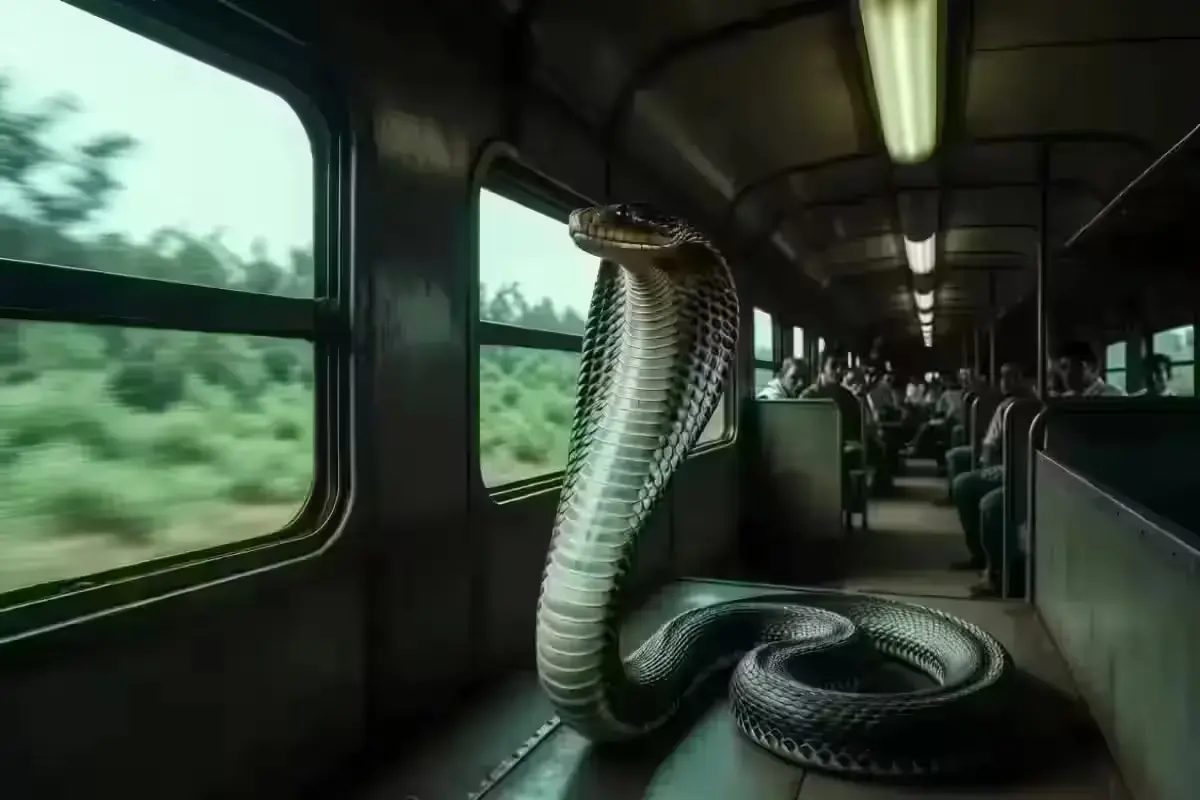
The Apex Hitchhiker: Why King Cobras are Riding India’s Rails
In a bizarre overlap of infrastructure and wildlife, new research suggests that King Cobras (Ophiophagus kaalinga) in Western India may be inadvertently using the railway network as a high-speed transit system. A study published in Biotropica on January 26, 2026, has identified a startling pattern of these apex predators appearing in “ecologically improbable” locations near railway stations and corridors in Goa.
Led by Indian scientist Dikansh Parmar and an international team from Germany and the USA, the study mapped 47 king cobra localities across Goa between 2002 and 2024. While 18 records were in North Goa and 29 in South Goa, the outliers are what caught the scientists’ attention. Five specific sightings occurred directly at or near busy railway infrastructure – areas that distribution models deemed entirely unsuitable for the forest-dwelling species.
Accidental Commuters: How They Get On Board
Unlike other linear infrastructure like roads, which often act as “mortality sinks” for snakes, railways may be functioning as unintentional corridors. Experts believe the snakes are not seeking a seat in the AC coach but are likely lured to stationary freight wagons in forested rail yards. These yards offer three things a cobra loves: shelter, darkness, and an abundance of rodents. Once a snake enters a goods wagon at night, it can travel dozens of kilometers, emerging in dry lowlands far from its original Western Ghats habitat.
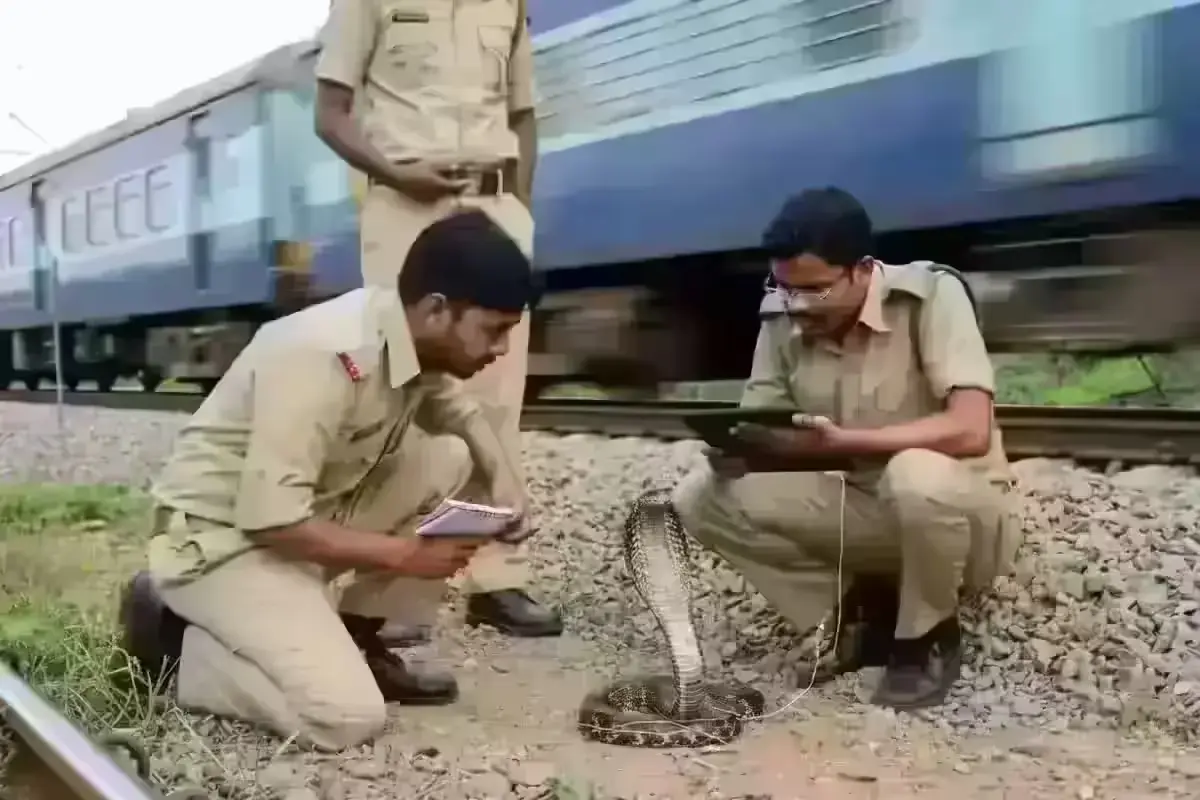
The sightings weren’t just near the tracks; they were intimate. One king cobra was rescued at Chandor railway station, hiding among stored rails and concrete pillars. Others appeared in Loliem and Vasco da Gama. Passengers and railway laborers have reported the shock of seeing these 13-foot giants in environments where they simply don’t belong. Analysts might read this as a clear signal that human expansion is no longer just fragmenting habitats—it’s actively transporting the inhabitants.
Contextual Shift: High-Tech Rails vs. Ancient Predators
This news comes at a time when Indian Railways is undergoing a massive 2026 modernization drive, with the launch of Vande Bharat sleeper trains and faster testing tracks. However, as train speeds and frequencies increase, the risk of “accidental dispersal” grows. In 2025 and early 2026 alone, social media has been flooded with “snakes on a train” videos, including an Indian cobra on a windowsill of the Lokshakti Express and a python in the Garib Rath Express.
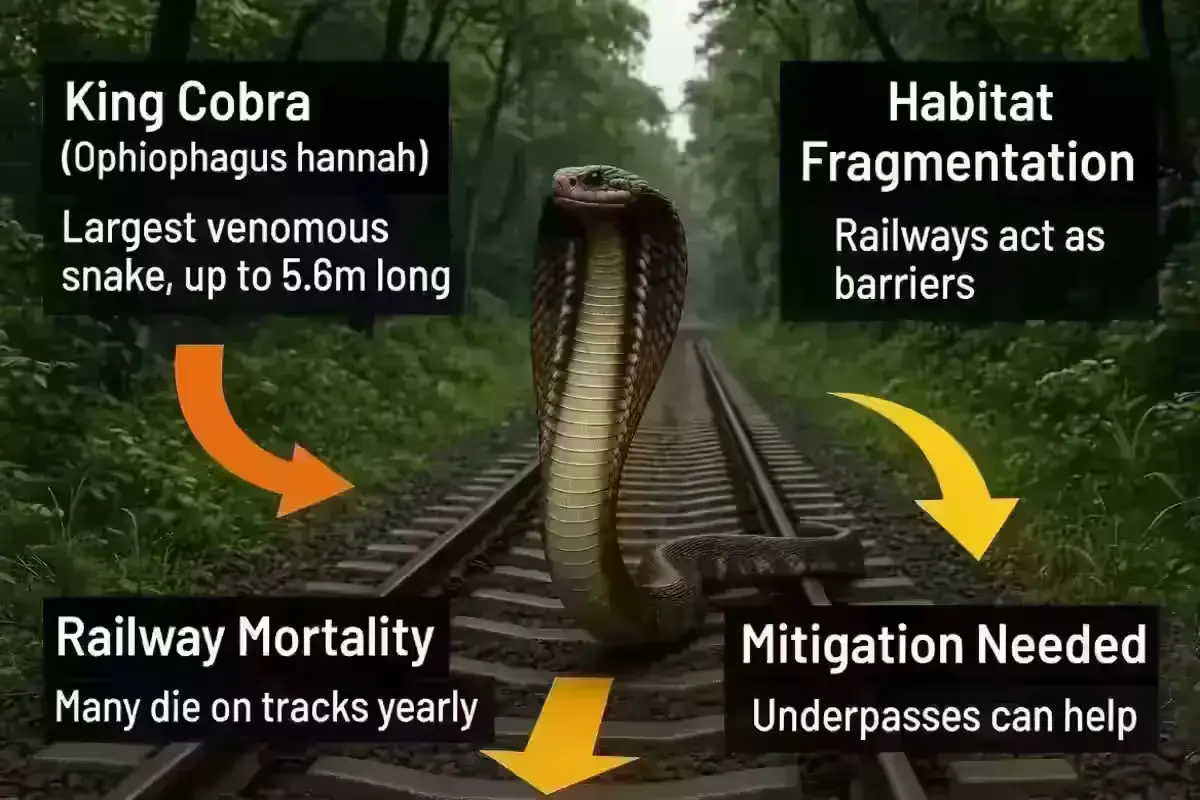
Expert Prediction: As rail electrification and multitracking continue into late 2026, we may see an increase in human-wildlife conflict at rail hubs. We can expect railway authorities to implement stricter “wildlife auditing” at forest-bordering rail yards to prevent these stowaways from reaching urban centers.
What To Do Now: Passenger & Safety Advice
For the average traveler, the thought of a king cobra as a fellow passenger is terrifying. While these snakes are generally shy, a “hitchhiking” cobra is likely stressed and defensive. Here is the actionable advice for anyone encountering a reptile on the tracks or in a coach:
- Don’t be a hero: India currently lacks a specific antivenom for the O. kaalinga species (Western Ghats King Cobra). A bite can be rapidly fatal.
- Report immediately: Notify the Railway Protection Force (RPF) or use the RailMadad app. Do not attempt to capture the snake using luggage or sticks.
- The “Rodent Factor”: If you are a railway worker, keeping yards free of food waste reduces the rodent population, which in turn reduces the “lure” for king cobras.
The simple truth is that while we are building faster ways to travel, nature is occasionally checking the timetable too. This research marks a pivotal step in understanding how human infrastructure silently reshapes the lives of the world’s largest venomous snakes.
Frequently Asked Questions
1. Is there an antivenom for King Cobra bites in India?
Currently, the polyvalent antivenom used in India is not specifically designed for King Cobras. The 2026 study highlights the urgent need for species-specific antivenom development.
2. Are these snakes being smuggled?
While smuggling occurs (previous reports noted cobras in bags on trains), this 2026 study suggests the movement in Goa is largely accidental, with snakes entering freight wagons for shelter or prey.
Disclaimer: Figures and sighting locations are based on recent scientific publications and verified rescue records. Wildlife behavior is unpredictable; always contact professionals for snake encounters.
Written by: Pravin Kumar – News Desk – News Hours18 – https://www.newshours18.com