

Every Nine Minutes, India Loses Someone to a Snakebite
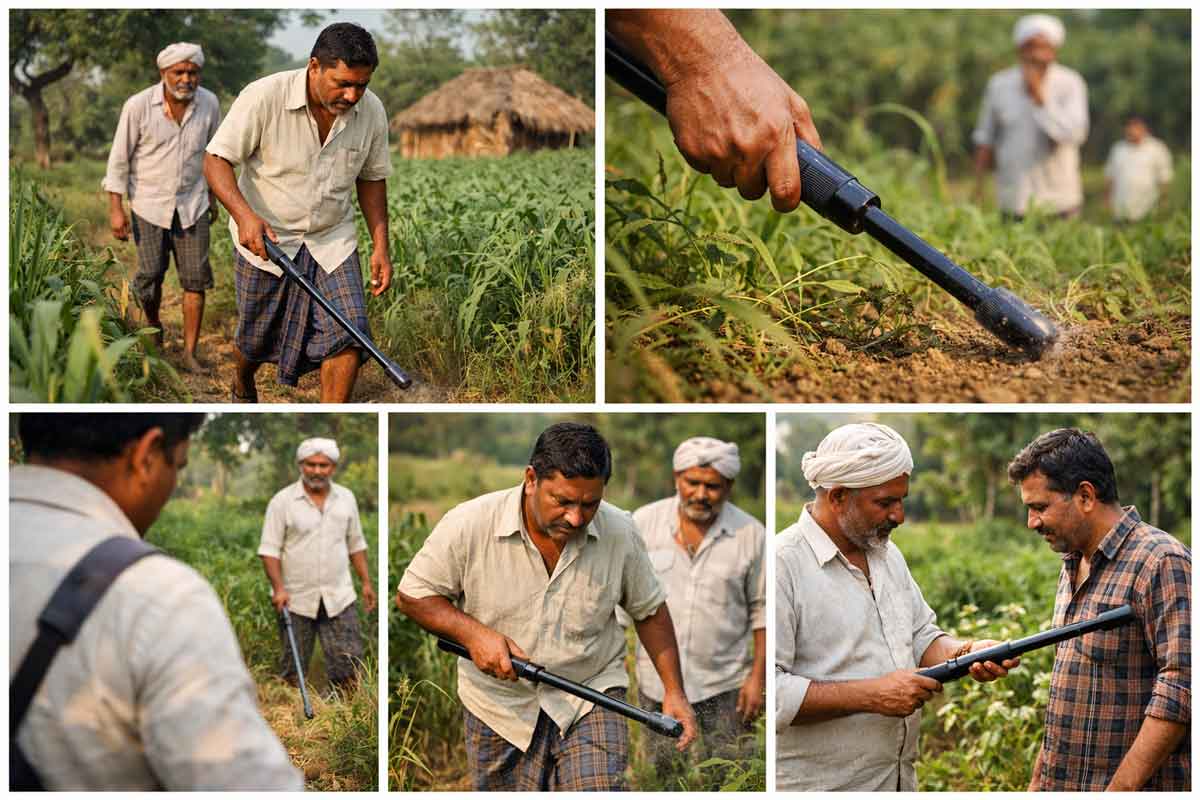
On April 13, 2026, Union Agriculture Minister Shivraj Singh Chouhan shared a video that stopped a lot of people mid-scroll. In it, he was holding a simple-looking stick and claiming it could detect a snake hiding 100 metres away. The device is called the Kisan Mitra Chhadi, developed by Indian scientists, and it is being presented as a life-saving tool for farmers who work in fields where venomous snakes are a daily, invisible risk. The timing matters. India is approaching the pre-monsoon season historically the deadliest stretch of the year for snakebite incidents.
Before anything else, consider this number: 58,000 Indians die from snakebite every single year, according to a nationally representative study published in eLife and cited by the World Health Organization. That is one death every nine minutes. Not from cancer. Not from road accidents. From a snake that was simply hiding where it always hides in wet soil, under crop stubble, inside irrigation channels and a farmer who did not see it in time.
So What Exactly Is the Kisan Mitra Chhadi?
The Kisan Mitra Chhadi is a handheld smart device designed specifically for farmers working in fields. When the farmer activates it by pressing a button and placing it against the ground, the device begins scanning the surrounding area. If a venomous creature – snake, scorpion, or similar is present within approximately 100 metres, the stick vibrates sharply to warn the user. The idea is simple: alert the farmer before he steps toward the danger, not after.
There is also a solar-powered torch built into the device. This is not a small detail. Most snakebite incidents in India happen during the monsoon months of June to September, often at night or in low light, when farmers are irrigating fields or returning home through tall grass. A solar torch that needs no charging, no electricity, no battery replacement in that context, it is genuinely useful.
The device was developed by Indian scientists and has now received attention at the ministerial level. Shivraj Singh Chouhan, who holds the Agriculture portfolio in the central government, showcased it publicly and described it as a tool that could fundamentally change safety outcomes for India’s farming community.
The States Where This Device Is Needed Most
Here is the thing most news articles on this topic have not said clearly. Snakebite deaths in India are not spread evenly. They are concentrated devastatingly so in specific states and specific conditions.
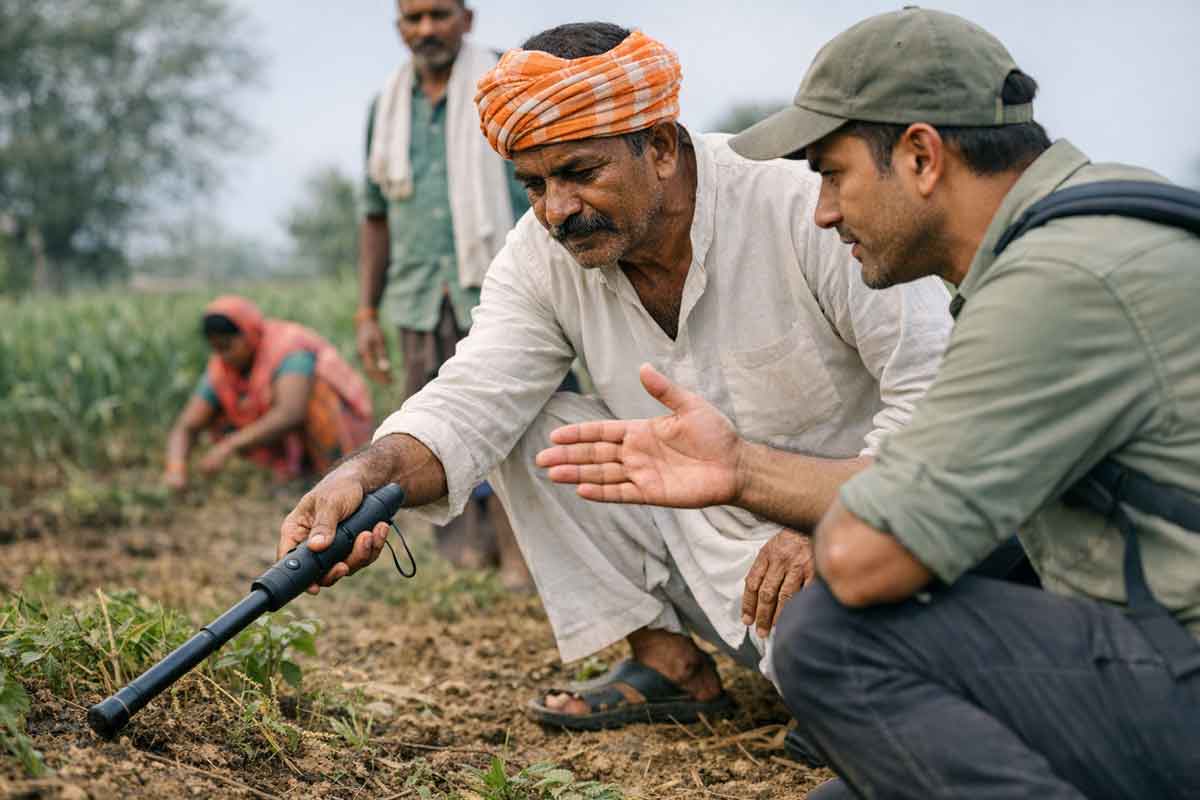
According to the Million Death Study, the states of Uttar Pradesh, Bihar, Jharkhand, Andhra Pradesh, Odisha, and Madhya Pradesh account for the overwhelming majority of annual snakebite fatalities. These are precisely the states where landless and marginal farmers work barefoot in waterlogged paddy fields, often at night, in conditions where Russell’s vipers and kraits actively hunt. Over 97% of all snakebite deaths in India occur in rural areas, and more than a quarter of victims are children under 15 — kids helping their parents after school, walking barefoot on muddy field paths in the dark.
The Kisan Mitra Chhadi, if distributed correctly, is not just useful here – it is critical.
Timeline: How This Story Developed
| Date | What Happened |
|---|---|
| 2000–2019 | WHO-cited study estimates 1.2 million snakebite deaths in India over two decades — average 58,000/year |
| 2017 | WHO officially classifies snakebite envenoming as a Neglected Tropical Disease, setting a 2030 target to halve deaths globally |
| Early 2026 | Indian scientists complete development of Kisan Mitra Chhadi vibration-based snake detection stick with solar torch |
| April 13, 2026 | Union Minister Shivraj Singh Chouhan publicly showcases the device, video goes viral on social media |
| April 13, 2026 (ongoing) | Trending nationally farmers, agricultural workers, and rural communities searching for availability and price details |
No, The Stick Does Not Chase Snakes Away
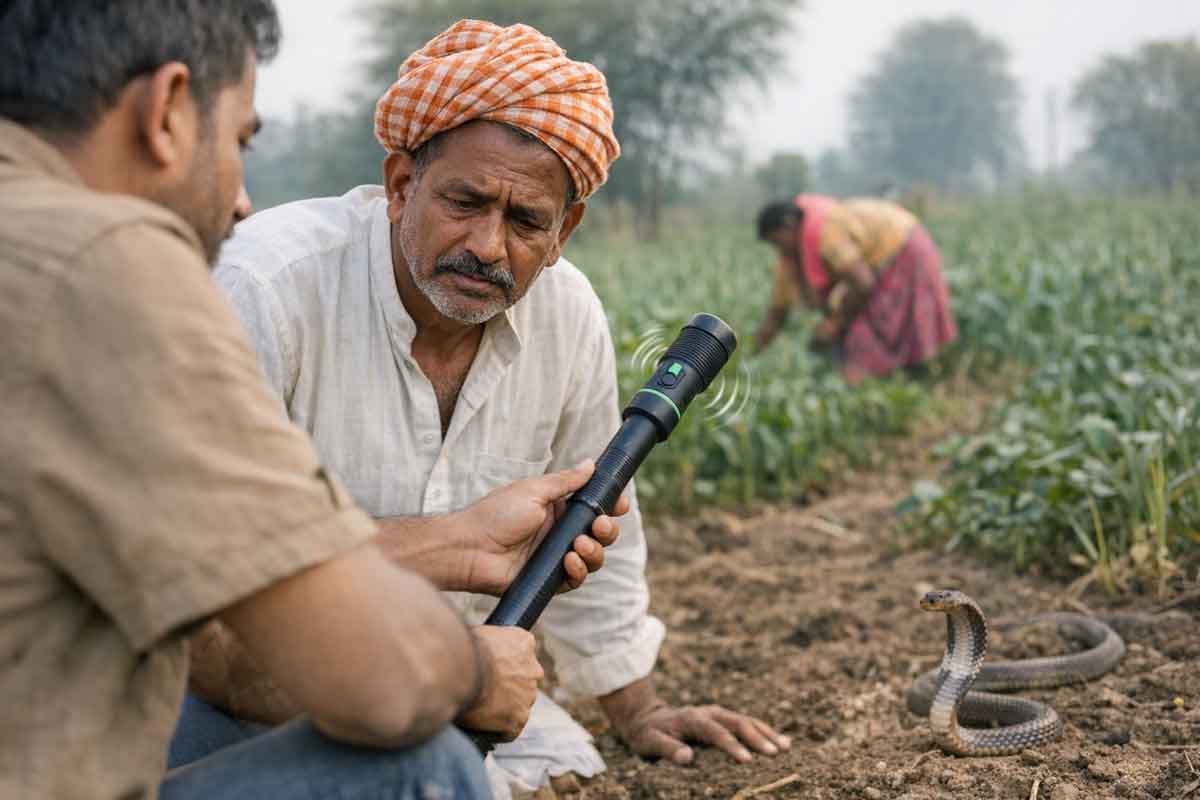
A lot of people watching the viral video are assuming that the vibration from the Kisan Mitra Chhadi repels snakes that it somehow scares them away through sound or tremor. That is not quite accurate, and it is important to understand the difference.
The device detects the presence of a snake and then alerts the farmer through vibration. It is a warning system, not a repellent. Think of it like a smoke alarm it does not put out the fire, but it tells you the fire is there before you walk into it. That is the correct mental model. The farmer still needs to back away safely. The device buys time and awareness. What it does not do is guarantee the snake leaves the field.
That said and this is the part that almost no article has noticed ground vibrations from the active device may incidentally cause nearby snakes to move away from the area, since snakes are highly sensitive to vibration through the ground. If that happens, both the farmer and the snake are safer. It is an accidental benefit, not a designed feature, but it is worth knowing.
Uncomfortable Question Behind the Celebration
India’s snakebite crisis has two components: the bite, and what happens after. The Kisan Mitra Chhadi addresses the first. But India’s antivenom supply still manufactured using a method largely unchanged since 1895 covers only the “Big Four” species: cobra, krait, Russell’s viper, and saw-scaled viper. Researchers at the Indian Institute of Science have raised concerns that available antivenom is already ineffective against a growing proportion of regional bites from species outside this list.
Prevention without adequate treatment is progress. But it is only half the story. The Kisan Mitra Chhadi deserves genuine appreciation — it is a low-cost, solar-powered, Indian-engineered solution to a problem that has killed millions. It just should not be the end of the conversation.
What Is the Current Status And Where Does It Go From Here?
As of April 13, 2026, the Kisan Mitra Chhadi has been officially showcased at the ministerial level. Formal pricing, government subsidy details, and a distribution roadmap have not yet been publicly announced in granular detail. Given India’s track record with agricultural technology rollouts, the critical next step is whether this device reaches gram panchayats in Bihar, Jharkhand, and eastern UP the highest-risk areas rather than being available only in well-connected markets and progressive farming clusters.
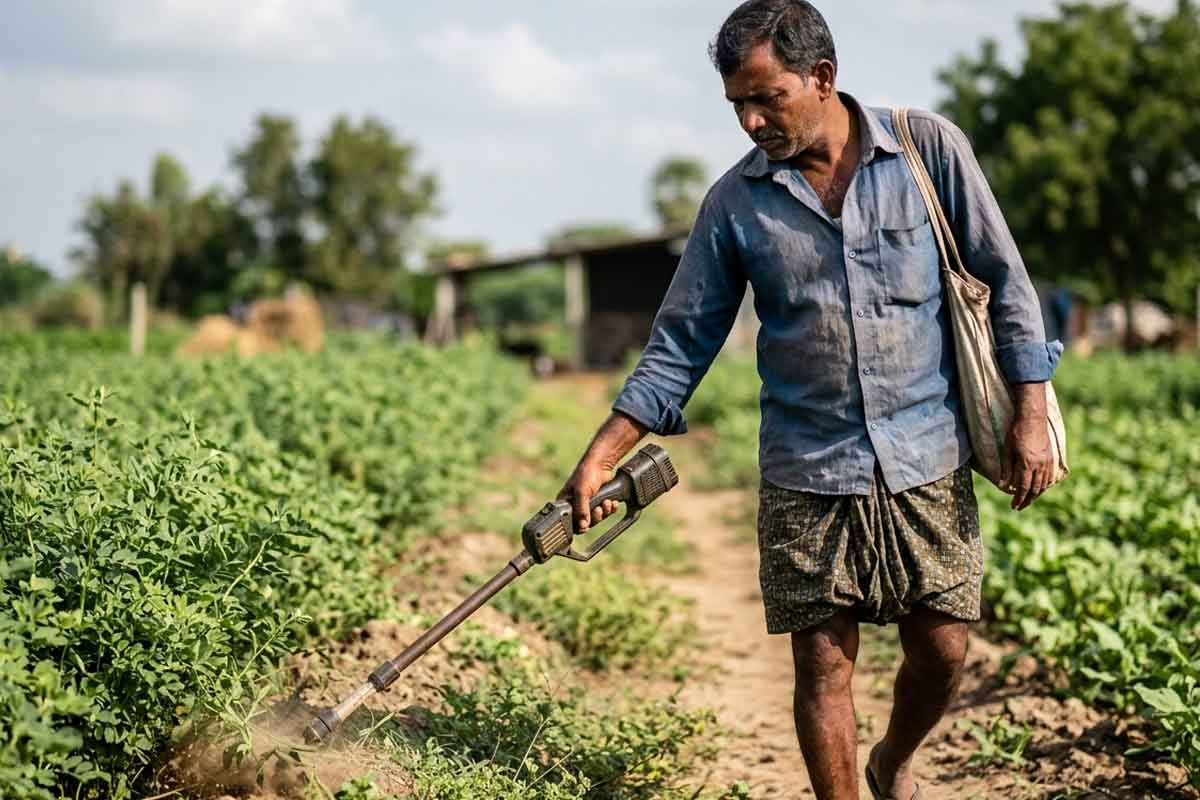
Follow updates through the Ministry of Agriculture’s official channels at agricoop.nic.in and official state agricultural department portals. If you are a farmer or a village-level extension worker (Krishi Mitra), check with your nearest Krishi Vigyan Kendra (KVK) these are typically the first distribution points for new agricultural devices backed by government science institutions.
- Ask your KVK about availability and whether subsidised pricing is being offered
- Pre-monsoon is the right time to get equipped do not wait until June
- If you work in a high-risk state (Bihar, UP, Odisha, Jharkhand), prioritise this over other farm gadget purchases this season
- Teach every person working in your field including children what the vibration signal means and what to do when it activates
FAQ
Q. What is the price of Kisan Mitra Chhadi and where can I buy it?
As of April 2026, official pricing and sales channels have not yet been publicly confirmed by the government. The device has been showcased at the ministerial level but a formal distribution plan is still being awaited. Your nearest Krishi Vigyan Kendra (KVK) is the best place to check for availability and any government subsidy that may apply. Keep watching the Ministry of Agriculture website at agricoop.nic.in for official updates.
Q. Does the Kisan Mitra Chhadi actually repel snakes or just detect them?
It detects, not repels. When activated and placed on the ground, it scans the surrounding area and vibrates to warn the farmer if a venomous creature is within roughly 100 metres. It is a warning system like a smoke alarm. You still need to move away from the danger. Ground vibrations from the device may incidentally disturb nearby snakes, but that is not its designed function.
Q. Which states in India face the highest snakebite risk for farmers?
According to the WHO-cited Million Death Study, Uttar Pradesh, Bihar, Jharkhand, Andhra Pradesh, Odisha, and Madhya Pradesh together account for the majority of India’s annual snakebite deaths. Risk peaks during the monsoon months of June to September, particularly in low-altitude agricultural areas near water bodies. If you farm in any of these states, this device is directly relevant to you.
Disclaimer: This article is based on publicly available information from government announcements, WHO data, and verified news sources as of April 13, 2026. The Kisan Mitra Chhadi is a newly announced device and official pricing, availability, and distribution details are subject to change. Readers are advised to verify the latest information through official government portals before making any purchasing decisions. This article does not constitute medical advice. In case of snakebite, seek emergency medical help immediately.
Written by: Anil Sinha – News Hours18