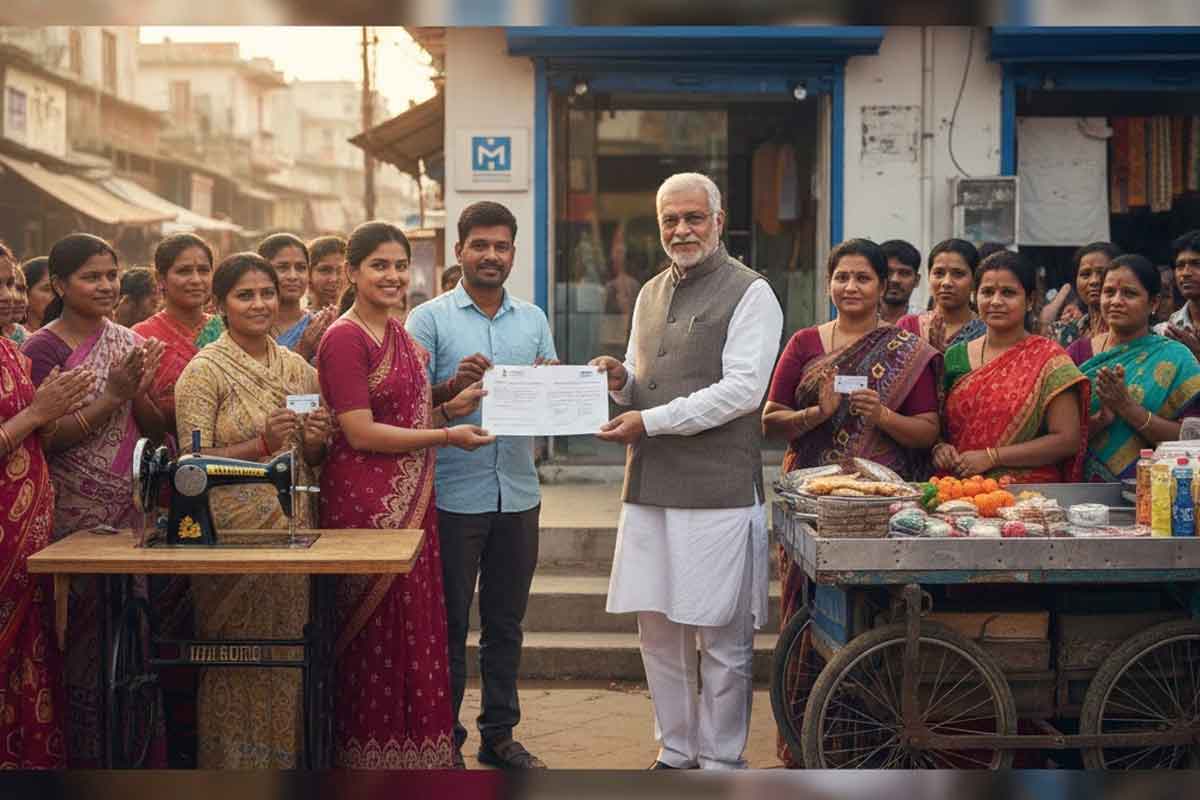


Empowering Ambitions: The Pradhan Mantri Vidyalaxmi Scheme
Higher education in India is often perceived as a high-stakes financial hurdle. To bridge this gap, the Government of India has introduced the Pradhan Mantri Vidyalaxmi (PM-Vidyalaxmi) Scheme. This initiative is specifically designed to ensure that meritorious students are not denied professional education due to financial constraints. Unlike traditional bank loans that often require heavy paperwork and security, PM-Vidyalaxmi simplifies the process through a unified digital platform.
For a student coming from a middle-class family, the stress of securing a seat in a premier institute is often followed by the “how will we pay?” conversation. This scheme acts as a safety net, allowing students to focus on their entrance exams rather than bank visits. It targets students getting admission into the top 860 quality higher education institutions (QHEIs) across the country.

Key Benefits and Financial Support
The scheme provides a comprehensive financial package that covers not just tuition fees but also other expenses related to the course. Here are the core pillars of the support system:
- Collateral-Free Loans: For loan amounts up to Rs 7.5 Lakh, the government provides a credit guarantee of 75%, meaning students don’t need to provide assets as security.
- Interest Subvention: Students from families with an annual income up to Rs 8 Lakh receive a 3% interest subvention during the moratorium period for loans up to Rs 10 Lakh.
- Broad Coverage: The scheme applies to more than 22 lakh students potentially entering top-tier institutions every year.
- Digital-First Approach: Applications are handled through a simplified portal where students can track their status in real-time.
Strategic Outlook and Market Comparison
Analysts might read this as a significant upgrade to the existing CSIS (Central Sector Interest Subsidy) schemes. Historically, such moves have meant a consolidation of fragmented educational aids into a single, high-impact window. By linking the scheme to the NIRF (National Institutional Ranking Framework) rankings, the government is incentivizing students to aim for high-quality institutions, effectively raising the bar for academic excellence.
Compared to the education loan landscape of 2020, the 2026 PM-Vidyalaxmi model offers a much more aggressive interest relief structure. While previous data on specific payout timelines is not available in current reporting, the push for a “transparent and student-friendly” interface suggests a faster turnaround time for disbursements. This is the closest the Indian education system has come to a universal credit line for talent.

What Students Should Do Now
If you are appearing for competitive exams like JEE, NEET, or CUET, you should first check if your target college falls within the NIRF Top 100 or the designated 860 QHEIs. The actionable next step is to register on the official portal as soon as your admission is confirmed. Do not wait for the semester to begin, as processing financial aid early can prevent last-minute fee payment delays. Figures regarding exact interest rates may shift once official updates arrive from participating banks.
Written by: Anil Sinha – Government Welfare Schemes Correspondent – News Hours18 – https://www.newshours18.com
FAQ
Q. Which institutions are covered under the PM-Vidyalaxmi scheme?
The scheme covers the top 860 Quality Higher Education Institutions (QHEIs) in India, including those ranked in the Top 100 of NIRF categories.
Q. Is there a family income limit for the interest subvention?
Yes, students with a family annual income of up to Rs 8 Lakh are eligible for a 3% interest subvention on loans up to Rs 10 Lakh.
Disclaimer : This information is based on government portal details as of early 2026. Specific loan terms, interest rates, and institutional lists are subject to periodic revision by the Ministry of Education and participating financial institutions.