
NVIDIA DLSS 5: Everyone Is Calling It the “GPT Moment for Graphics” – But Nobody Is Telling You the Full Story
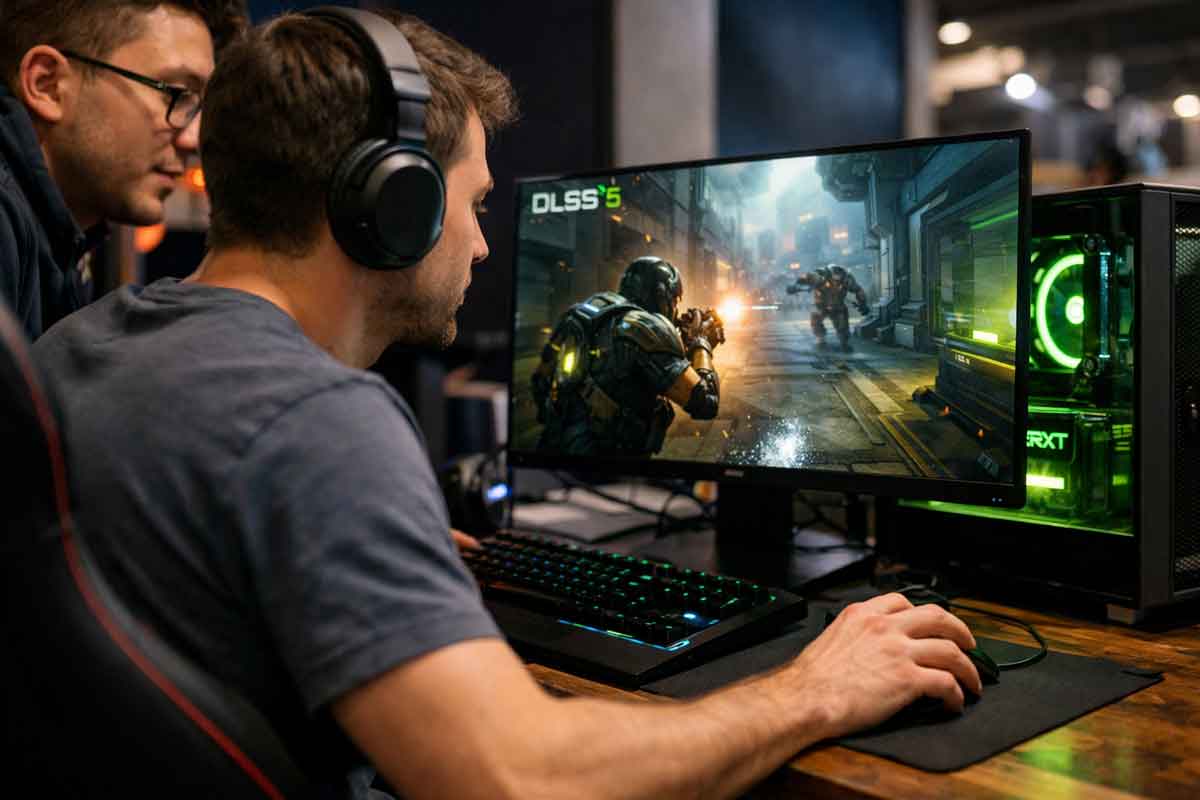
Just yesterday, on March 16 at GTC 2026, NVIDIA CEO Jensen Huang dropped an announcement that sent the gaming world into a frenzy. The technology is called DLSS 5 and Huang himself called it the “GPT moment for graphics.” What makes this different from every DLSS update before it is simple: DLSS 5 does not just boost your frame rate. It fundamentally changes how lighting and materials look in a game, in real time. India has over 500 million active internet users and a rapidly growing PC gaming community and if you watched the DLSS 5 trailer this morning, you already know the reactions are completely split. Some people are genuinely excited. Others are furious. Understanding both sides is the only way to figure out what this actually means for you.
From DLSS 1 to DLSS 5: A Quick Refresh Before We Go Deeper
If you are not fully up to speed on DLSS history, here is the short version. DLSS stands for Deep Learning Super Sampling. The original idea was straightforward: render the game at a lower resolution, then use AI to upscale it so your screen shows something sharper and cleaner than the GPU actually rendered.
| Version | What It Did | GPU Generation | Year |
|---|---|---|---|
| DLSS 1 | Basic AI upscaling results were mixed | RTX 20-series | 2018 |
| DLSS 2 | Temporal accumulation major quality improvement | RTX 20/30-series | 2020 |
| DLSS 3 | Frame Generation — AI created entirely new frames | RTX 40-series | 2022 |
| DLSS 4 / 4.5 | Multi-Frame Gen 23 out of every 24 pixels AI-generated | RTX 50-series | 2025–26 |
| DLSS 5 | Neural Rendering – AI injects photoreal lighting and materials | RTX 50-series only | Fall 2026 |
One thing worth noticing immediately, jump from DLSS 3 to DLSS 5 did not happen on RTX 40-series cards. This is a RTX 50-series exclusive feature. If you are running an RTX 3080 or even a 4070 DLSS 5 is simply not available to you right now.
So What Does DLSS 5 Actually Do?
Here is the part most explainers gloss over. DLSS 5 is not upscaling. It is not frame generation either. It is a real-time neural rendering model and that is a meaningfully different thing.
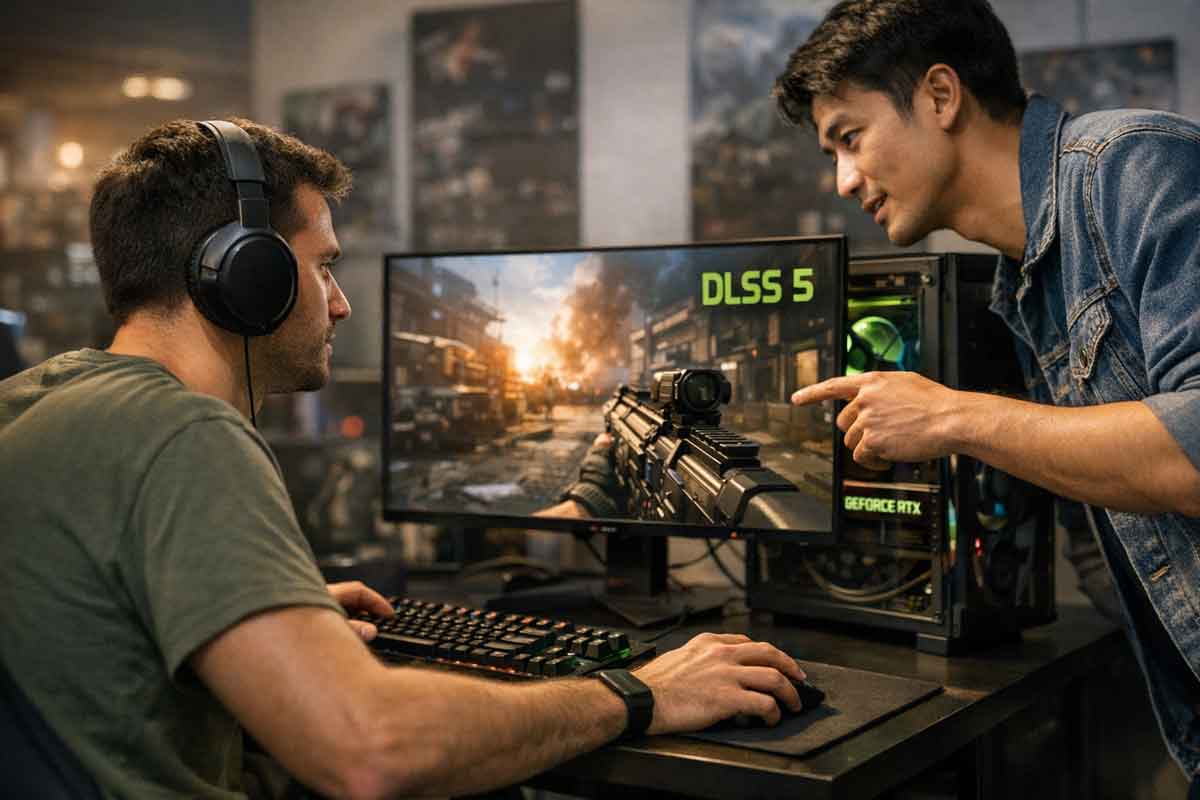
Here is how it works: the model takes the color data and motion vectors from a single game frame, then uses AI to inject photoreal lighting directly into that scene in real time, at up to 4K resolution, without slowing the game down. Characters’ hair, skin subsurface scattering, fabric sheen, environmental lighting conditions like front-lit, back-lit or overcast skies, the model reads all of this from one frame and generates a visually precise output.
According to NVIDIA’s official press release, the model is trained “end to end” to understand complex scene semantics. Think of it this way: the AI does not just throw generic brightness on top of everything. It actually understands what is in the scene a face, a leather jacket, a wet stone wall and lights each one differently the way Hollywood VFX artists would. Except it does this in 16 milliseconds instead of hours.
The Controversy Everyone Saw Coming But Nobody Addressed Honestly
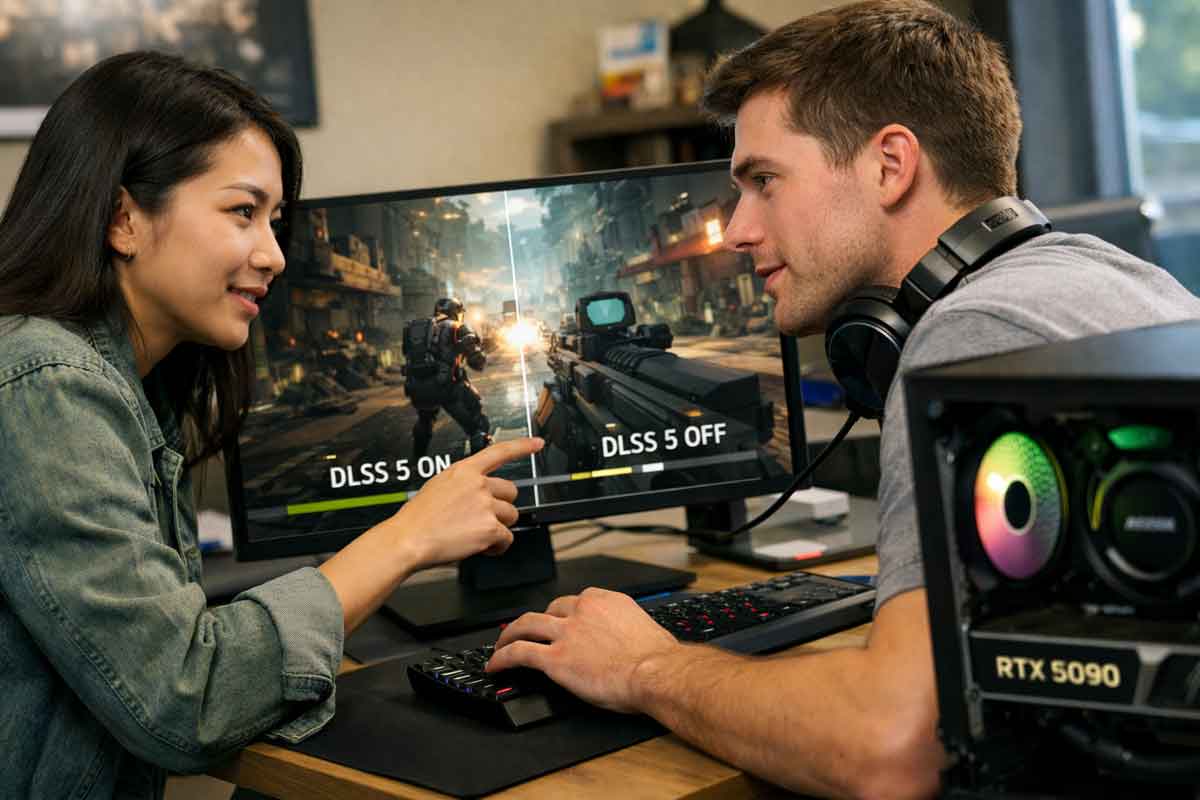
The GTC demo showed a side-by-side comparison using Resident Evil: Requiem protagonist Grace Ashcroft DLSS 5 ON versus OFF. And that comparison is where things got messy fast.
DLSS 5 OFF: Grace looks like a realistic, intentionally designed FBI agent. Natural skin texture, deliberate artistic choices from the CAPCOM team.
DLSS 5 ON: Fuller lips. Smoother skin. A more polished, AI-beautified appearance that many viewers found deeply uncomfortable.
The internet’s instant reaction was blunt “this is not a graphics upgrade, this is an Instagram filter.” Artists who have worked with studios like Ubisoft and Blizzard publicly said this felt disrespectful to intentional game art direction. The core concern is not just aesthetic. It is about who gets to decide what a character looks like.
NVIDIA’s counter-argument is that developers will have detailed per-scene controls intensity sliders, color grading tools, masking options so artists can decide where and how DLSS 5 applies its enhancements. NVIDIA specifically described the technology as “designed to preserve artistic intent.” Whether those controls are powerful enough in practice is something we will only find out in Fall 2026.
The Myth You Need to Stop Believing Right Now
The most common wrong assumption circulating right now is this: “DLSS 5 modifies character models and textures.” It does not. Not even close.
DLSS 5 only processes lighting. The underlying 3D geometry stays exactly the same. The textures are untouched. What you are seeing in the Grace Ashcroft comparison is entirely the effect of different lighting hitting the same geometry. Think of it like a professional photographer lighting the same person two different ways same face, completely different feel in the photo. The model did not change her face. The light did.
RTX 5070 and Mid-Range Cards – The Performance Question Nobody Has Answered Yet
Most people watching the DLSS 5 demo missed a small but critical detail: the demo footage was captured using two RTX 5090 GPUs running simultaneously – one handling the game, one dedicated entirely to DLSS 5 neural rendering. The total hardware cost for that setup sits well above $4,000 USD. In India, a single RTX 5090 is already priced around ₹2.5 to ₹3 lakh and stock availability is a separate problem entirely.
The obvious question for most Indian gamers is: what happens on an RTX 5070 or 5060? NVIDIA says DLSS 5 will be optimized for a single GPU by Fall 2026. But as of today, there are zero benchmarks available for mid-range RTX 50-series cards running DLSS 5. The Shortcut’s coverage of the announcement specifically noted that the demo footage was dual-GPU captured, which leaves the real-world single GPU performance entirely uncertain at this stage.
Confirmed Games Getting DLSS 5 Support
NVIDIA has confirmed support from major publishers including Bethesda, CAPCOM, Ubisoft, Warner Bros. Games, Tencent, NetEase, Hotta Studio, NCSOFT and S-GAME. Here are the confirmed titles so far:
- Resident Evil: Requiem (CAPCOM)
- Starfield (Bethesda Game Studios)
- Assassin’s Creed Shadows (Ubisoft / Vantage Studios)
- Hogwarts Legacy (Warner Bros. Games)
- The Elder Scrolls IV: Oblivion Remastered (Bethesda)
- Phantom Blade Zero (S-GAME)
- NARAKA: BLADEPOINT (NetEase)
- Delta Force (Tencent)
- Sea of Remnants, Where Winds Meet, AION 2 and more
Bethesda’s Todd Howard personally said that running DLSS 5 in Starfield was “amazing” and the team cannot wait for players to experience it. CAPCOM’s executive producer Jun Takeuchi confirmed the technology aligns with their cinematic vision for Resident Evil. Vantage Studios co-CEO Charlie Guillemot said DLSS 5 is letting them build the worlds they have always wanted to make in Assassin’s Creed Shadows.
What About AMD GPU Users?
This is the question most articles are skipping, but it matters for a large chunk of Indian PC gamers. DLSS 5 is exclusive to NVIDIA RTX 50-series GPUs. AMD’s FSR 4 (FidelityFX Super Resolution) is a strong upscaling and frame generation option that works on any GPU, but AMD has not announced a neural rendering equivalent. Intel XeSS similarly stays in the upscaling and frame generation space. If you are running an
AMD RX 7800 XT or even the newer RX 9070 DLSS 5 is simply not on the table for you, at least not yet.
What Should You Actually Do Right Now?
- Already on RTX 50-series? Wait for Fall 2026. DLSS 5 will come through a GeForce driver update automatically for supported games. No extra purchase needed.
- On RTX 40-series? DLSS 4 Multi-Frame Generation is arriving by end of March 2026. Try that first before making any upgrade decision based on DLSS 5.
- On AMD GPU? FSR 4 is still excellent for performance. A neural rendering equivalent from AMD has not been announced. it is a wait-and-watch situation.
- Thinking of buying a new GPU? Wait for real-world DLSS 5 benchmarks on mid-range cards before spending. The demo was on dual RTX 5090s retail performance on a 5070 or 5060 is completely unknown right now.
FAQ
Q. What is the difference between DLSS 5 and DLSS 4?
DLSS 4 was about performance more frames, better upscaling. DLSS 5 works at a completely different level. It runs a real-time neural rendering model on top of your game’s existing lighting system, injecting photoreal materials, skin scattering and fabric sheen that the game engine itself did not render. Simply put: DLSS 4 gave you more frames, DLSS 5 gives you more realism.
Q. Does turning on DLSS 5 make game characters look completely different?
Yes, But it is not changing character models or textures. It only processes lighting. The Grace Ashcroft controversy in the Resident Evil Requiem demo came entirely from how DLSS 5’s lighting hit the same geometry differently. The 3D model was identical in both shots. Developers will also have per-scene intensity controls to manage how strong the effect is in their specific game.
Q. Can RTX 5070 and RTX 5060 users also use DLSS 5?
Yes, DLSS 5 is designed for the entire RTX 50-series lineup. But the GTC demo ran on two RTX 5090 GPUs simultaneously. There are zero mid-range benchmarks available right now. Until real-world performance data comes out closer to Fall 2026 launch, it is too early to predict how smooth the experience will be on a 5070 or 5060.
Disclaimer: The information in this article is based on NVIDIA’s official press release dated March 16, 2026, The Shortcut, and publicly available GTC 2026 coverage. DLSS 5 is announced for Fall 2026 and features, performance specifications and compatibility details may change before final release. GPU prices mentioned are approximate India market estimates and are subject to change. Always verify current pricing and availability before making any hardware purchase decision.
Written by: Anil Sinha – Games Writer – News Hours18