

Iran shut the Strait of Hormuz. India’s LPG supply line snapped. Crude oil jumped 50% in a week. The rupee hit an all-time low of 93.94 against the dollar. Now the question is whether it holds at 95 or slides toward 100.
Rupee at an All-Time Low: The Numbers
On March 23, 2026, the rupee closed at 93.94 per dollar — its weakest level ever. By April it had slipped further to 95.20.
In the financial year ending March 2026, the rupee fell 9.88% against the dollar. That is its steepest annual drop in 14 years. The dollar cost 85 rupees in January 2025. It costs 95 now.
Foreign portfolio investors pulled out Rs 1.07 lakh crore from Indian markets in calendar year 2026. In March alone, capital outflows hit $13.4 billion — the largest single-month exit since the pandemic.
How the Gas Crisis Broke Things
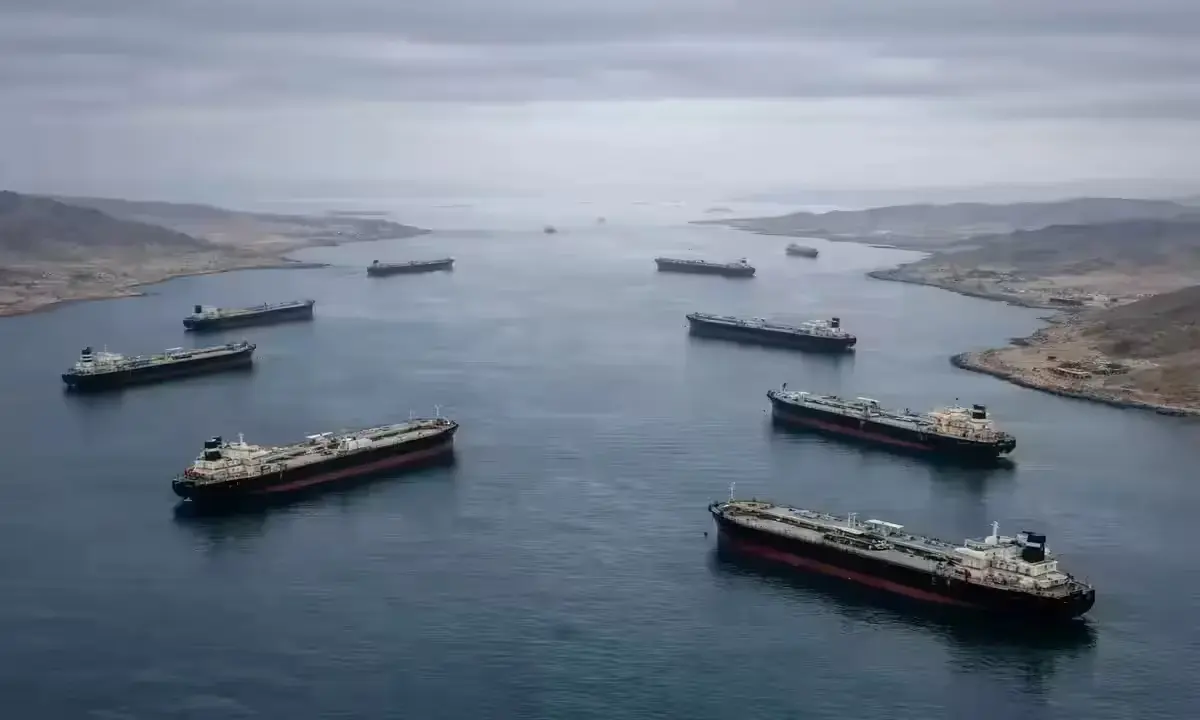
On February 28, 2026, the US and Israel launched airstrikes on Iran under Operation Epic Fury. Iran responded by closing the Strait of Hormuz — the waterway through which 20% of the world’s oil and 85% of India’s LPG imports pass.
Brent crude stood at $80–82 per barrel on March 2. By March 9 it had touched $120. A 50% spike in seven days.
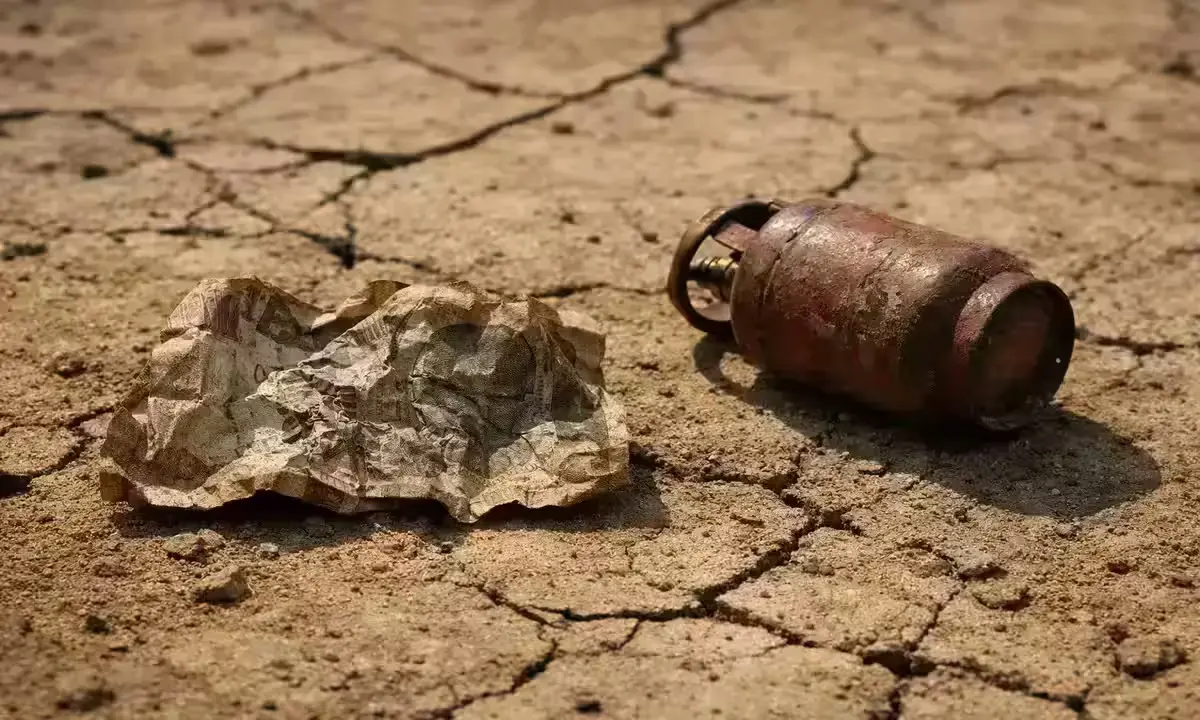
India is the world’s second-largest LPG importer. It sources 60% of its LPG from imports, most of it from the Gulf. The moment Hormuz closed, cooking gas ran short. Restaurants shut in Mumbai. Samosa and chai stalls went dark in Jaipur. People queued outside gas distribution centers at 3 a.m. to secure a cylinder.
Shipping insurance premiums jumped up to 50%. Urea imports for fertiliser stalled. Food production costs climbed. The IEA called it the largest supply disruption in the history of the global oil market.
Why the Dollar Is Strengthening
Higher energy prices pushed US inflation to 3.3% year-on-year in March 2026. The Federal Reserve now plans only a 25 basis point rate cut in 2026, down from the earlier expectation of 50. Risks are tilted toward no cuts at all. A higher-for-longer US rate keeps the dollar expensive.
Global uncertainty from the Iran war is pushing investors into dollars. Money is leaving emerging markets. India has taken the largest hit among major Asian economies.
Kotak Securities’ Anindya Banerjee put it plainly: the rupee is a hostage to developments around the Strait of Hormuz. As long as the disruption continues, it keeps energy prices elevated, widens the trade deficit, and drives capital out.
What the RBI Has Done
The Reserve Bank of India spent $12 billion in foreign exchange in the first week of the war alone to defend the rupee. Over the full fiscal year, it deployed over $55 billion from its reserves.
Forex reserves fell from a peak of $728.49 billion in February 2026 to $698.49 billion in April. The buffer still covers seven months of imports, which gives the RBI room to keep intervening. But every intervention drains the reserve further.
Will the Rupee Fight Back or Fall Further?
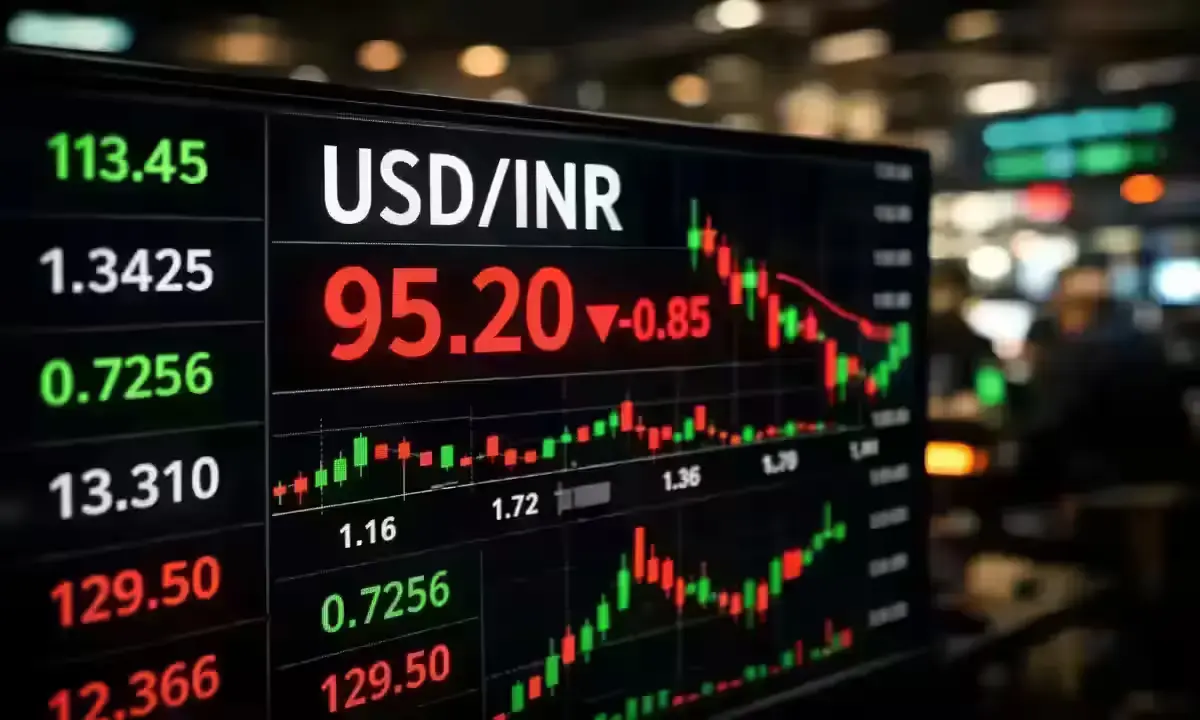
BMI, a unit of Fitch Solutions, expects the rupee to end 2026 around Rs 95 per dollar, with bearish and bullish factors roughly balanced. Anindya Banerjee of Kotak Securities puts the worst case at 96–97 if Iran war disruptions extend into mid-April.
A drop to 100 is not in anyone’s base case right now. Once tensions ease and Hormuz reopens, energy prices are expected to fall — and the rupee is likely to get a sharp relief rally.
Remittances are the other variable. In 2025, India received a record $135 billion in remittances. Around 38–40% of that came from Gulf countries. If the war drags on and Gulf incomes drop, remittances could fall by up to 30% — pushing the current account deficit beyond the projected 1.3% of GDP.
The Numbers at a Glance
| Rupee all-time low | Rs 93.94/$ (March 23, 2026) |
| FY26 rupee depreciation | 9.88% – steepest in 14 years |
| Crude oil spike | $80 – $120/barrel in one week |
| FPI outflows (2026 YTD) | Rs 1.07 lakh crore |
| RBI intervention (week 1) | $12 billion |
| Forex reserves (April 2026) | $698.49 billion (peak: $728.49B) |
| Gulf remittances (2025) | $54 billion (40% of $135B total) |
| Rupee forecast, end-2026 | Rs 95/$ (BMI / Fitch Solutions) |