
India-US Trade Breakthrough: Trump Slashes Tariffs to 18% Following Modi Call
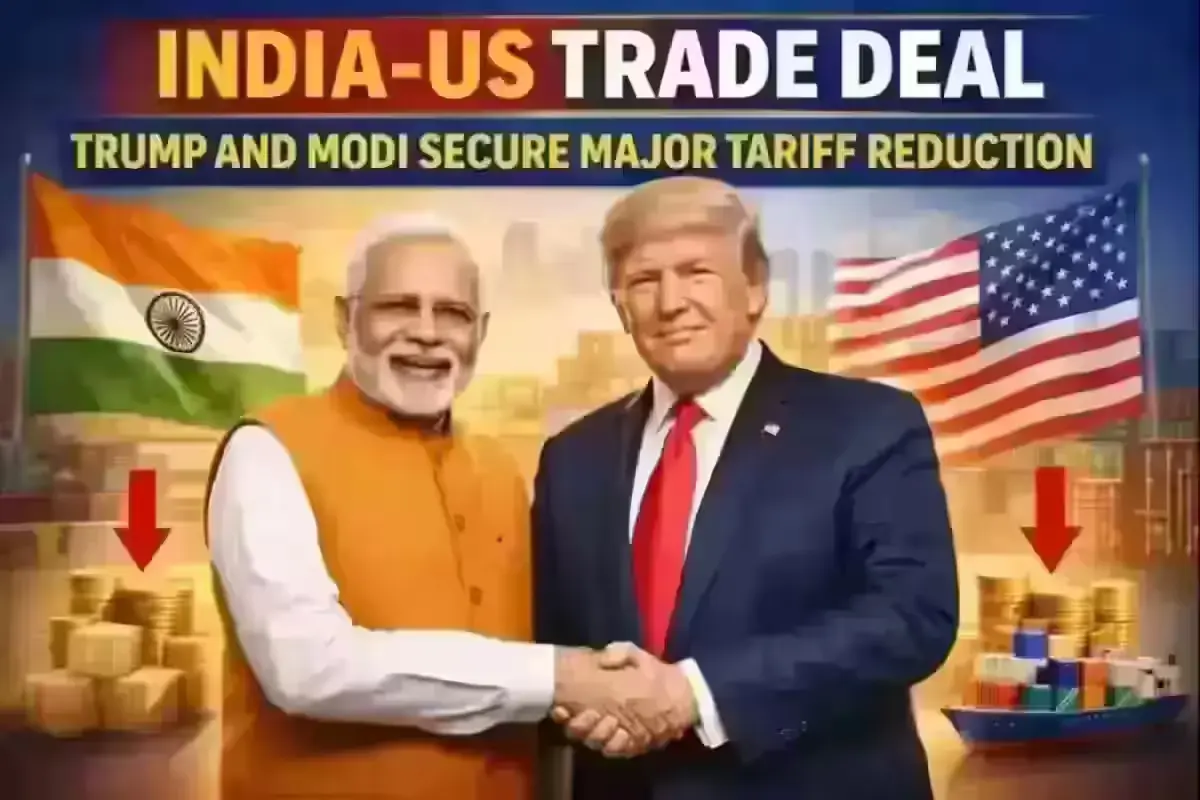
In a historic pivot for global commerce, US President Donald Trump announced on February 2, 2026, that the United States and India have reached a comprehensive trade agreement. The deal, finalized during a telephone conversation between President Trump and Prime Minister Narendra Modi, marks a sudden de-escalation of the trade tensions that had gripped both nations throughout late 2025. According to the announcement, the US will immediately reduce its “Reciprocal Tariff” on Indian goods from the punishing 25% rate down to 18%.
A Shift in Global Energy & Trade Alliances
The core of this agreement is a strategic exchange of energy security for trade relief. Prime Minister Modi has committed India to a massive $500 billion purchase of American energy, technology, and agricultural products. Most significantly, India has agreed to cease its procurement of Russian oil—a move that US officials believe will significantly “choke off” revenue for Moscow—shifting its supply chain toward the United States and potentially Venezuela.
The Tariff Roadmap: 2025 vs. 2026
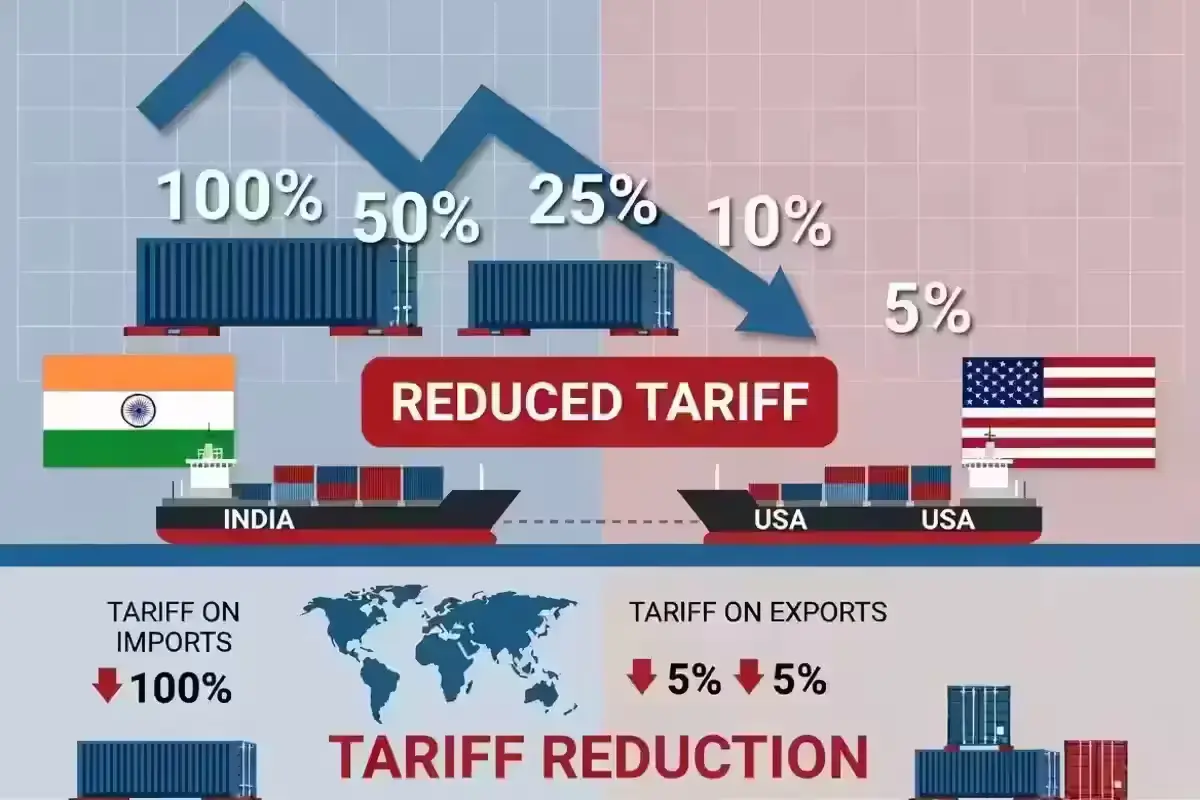
The following table illustrates the dramatic shift in the tariff landscape for Indian exporters. While 2025 saw rates climb as high as 50% for many sectors due to “penalties” related to Russian oil imports, the new deal provides a clear path toward reduction.
| Category | 2025 Peak Rate (Aug-Dec) | New Rate (Feb 2, 2026) | Target Long-Term |
|---|---|---|---|
| Reciprocal Baseline Tariff | 25% | 18% | Zero (Phased) |
| Russian Oil Penalty | +25% | Scrapped | NA |
| Textiles & Apparel | 50% | 18% | Zero |
| Gems & Jewellery | 50% | 18% | Zero |
| Pharma & Electronics | 0% (Exempt) | 0% | 0% |
Economic Impact and Expert Analysis
For the average Indian exporter in Surat’s textile hubs or Jaipur’s gemstone markets, this 32-point total drop (from 50% to 18%) is a massive “Sankranti gift.” Historically, such drastic shifts are rare without years of treaty negotiations. This “fast-track” approach bypasses the usual bureaucratic hurdles seen in the India-EU FTA signed last week. Analysts suggest that while the 18% rate still remains higher than the 10% baseline for some other nations, the commitment to eventually hit “ZERO” signals a new era of trust. However, figures may shift once official implementation orders are issued by the US Customs and Border Protection (CBP).

What to do now: Investors in Indian energy and IT sectors should watch for specific “Buy American” quotas that may favor US-aligned tech firms. Exporters should immediately review their shipping manifests to ensure they qualify for the 18% rate, which is effective “immediately” per President Trump’s declaration.
This deal effectively ends the “Trade War” era of 2025, substituting high-wall protectionism with a multi-billion dollar procurement strategy. It’s a win-win: Trump gets his “Buy American” headline, and Modi secures a vital market for India’s manufacturing surge.
Disclaimer: This report summarizes breaking news statements. Specific product-wise tariff schedules and legislative approvals in both the US and India are pending formal gazette notification.
Frequently Asked Questions
When do the new 18% tariff rates take effect? According to President Trump’s announcement on Truth Social, the reduction is effective “immediately” as of February 2, 2026.
Which sectors benefit most from this deal? Textiles, gems, jewellery, and engineering goods see the biggest relief, dropping from a combined 50% rate down to 18%.
Does this impact the India-EU trade deal? While separate, the US deal is more focused on energy and geopolitics, whereas the EU deal focuses on broader market access across 97% of tariff lines.