


8th Pay Commission: Proposals for 3.25 Fitment Factor and Higher Minimum Pay
The conversation around the 8th Pay Commission is gaining significant momentum as central government employees look toward 2026 for a substantial salary revision. Recent reports indicate that the National Council (JCM) has intensified preparations, beginning the memorandum drafting process following key meetings in early 2026. Central to these discussions is the fitment factor, which determines the multiplier used to revise the basic pay of employees across all levels.
Currently, the 7th Pay Commission uses a fitment factor of 2.57. However, employee federations, including the Federation of National Postal Organizations (FNPO), are pushing for a fitment factor of 3.25. If approved, this would mark a significant shift in the pay structure for over 48 lakh employees and 67 lakh pensioners. For many families, this isn’t just about numbers; it’s about keeping pace with the rising cost of living and inflation that has been steady over the last decade.
Comparative Analysis: 7th CPC vs. 8th CPC Expectations
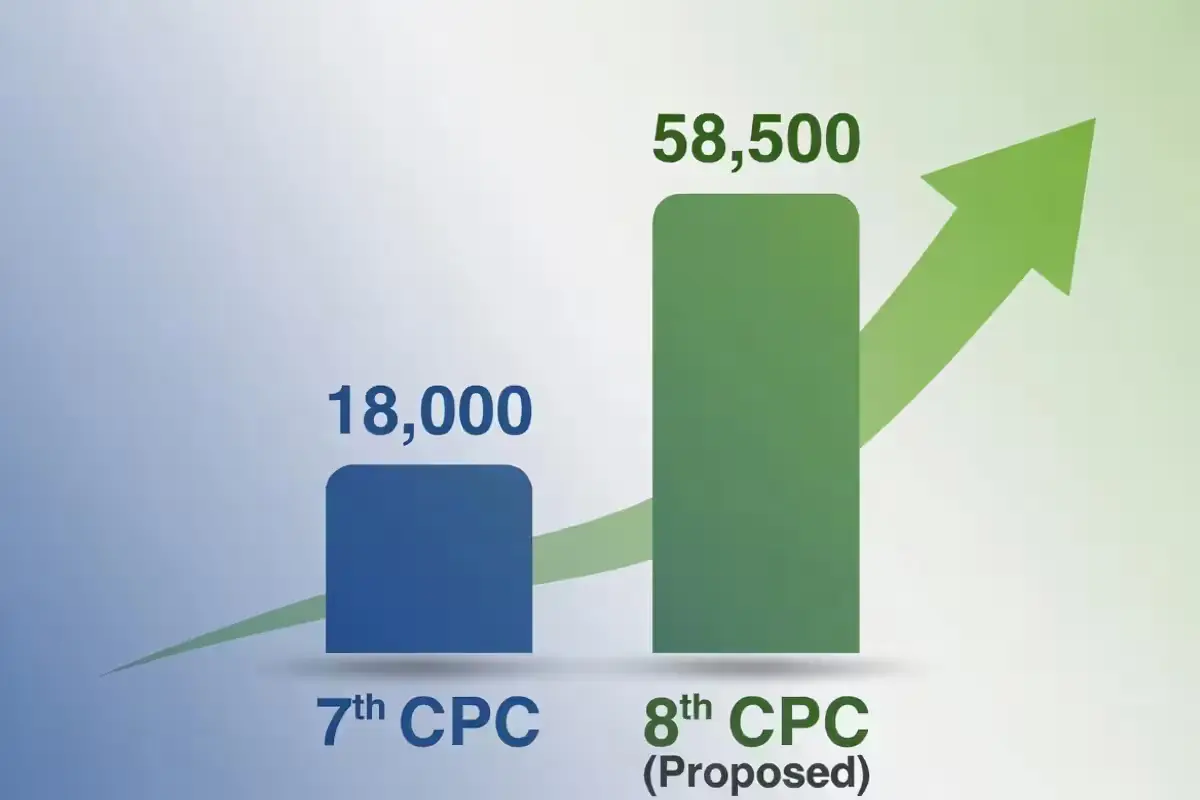
To understand the scale of the proposed changes, the following table compares the current 7th CPC figures with the potential outcomes of the 8th CPC based on union demands. Figures may shift once official updates arrive.
| Component | 7th Pay Commission (Current) | 8th Pay Commission (Proposed) |
|---|---|---|
| Minimum Basic Salary | 18,000 | 54,000 to 58,500 |
| Fitment Factor | 2.57 | 3.00 to 3.25 |
| Minimum Pension | 9,000 | 25,000 to 30,000 |
| Implementation Date | January 1, 2016 | January 1, 2026 (Expected) |
Salary Projections and Minimum Wage
One of the most discussed figures in the drafting phase is the revision of the minimum basic salary. If the proposed 3.25 fitment factor is implemented, the new minimum basic pay could rise to approximately 58,500. Here is the breakdown of the transition:
- 7th Pay Commission Minimum: 18,000
- Proposed 8th CPC Factor (Uniform): 3.00 (Resulting in 54,000)
- Proposed 8th CPC Factor (Max): 3.25 (Resulting in 58,500)
- Expected DA Status: Likely to be merged or reset based on January 2026 levels as DA reaches near 70%.
Historically, pay commissions are constituted every ten years. Analysts suggest that while the effective date may be retrospective from January 1, 2026, the actual rollout might extend into 2027. This delay would result in substantial arrear payouts for employees. Analysts might read this as a necessary fiscal balancing act by the Finance Ministry to manage the immediate cash outflow.
Contextual Impact: Why This Matters Now

Unlike previous cycles, the current demand for a higher fitment factor is driven by a unique economic landscape. Since 2016, the Consumer Price Index (CPI) has seen fluctuations that the existing DA (Dearness Allowance) mechanism barely covers for lower-level employees (Level 1 to 5). A jump to a 3.25 factor would provide a real-income boost rather than just an inflationary adjustment. From a buyer’s perspective, this increase in disposable income is expected to stimulate the housing and automobile sectors significantly in late 2026.
For employees, the “what to do now” is clear: track the Joint Consultative Machinery (JCM) meetings closely. The drafting of the memorandum is the first formal step where specific demands for pay parity and arrears are codified. It’s a waiting game, but the gears are finally turning.
Frequently Asked Questions (FAQ)
1. What is the latest update on the 8th Pay Commission?
The NC JCM began the memorandum drafting process in early 2026, with major meetings scheduled for February to finalize demands for a 3.25 fitment factor.
2. Will employees receive arrears if the implementation is delayed?
Yes. Historically, even if the notification is delayed, the salary hike is applied retrospectively from January 1, 2026, and employees receive a lump-sum arrear for the intervening months.
3. Is the 3.25 fitment factor confirmed by the government?
No, the 3.25 factor is a proposal by employee unions. The government will make a final decision based on the Pay Commission’s recommendations and fiscal capacity.
Disclaimer: This report is based on current proposals and news drafts. The central government has not yet officially confirmed the final fitment factor or minimum wage. All figures are projections and subject to change.