

● LIVE COVERAGE
The March 2026 Pixel Drop’s headline feature exits limited availability today, giving millions of Pixel owners a phone that adapts itself to train journeys before they even board — and that is a harder problem for Apple than it looks.
| 2–3 Weeks to learn your commute | 5+ Customisable mode settings | 31% India AI-feature adoption YoY¹ |
The News
What Just Happened
Google has pushed Google Pixel Transit Mode into a full worldwide rollout — no app update required, no side-load needed. If you installed the March 2026 update, it’s already on your device. Navigate to Settings → Modes and the new “Transit” option sits right beside Do Not Disturb and Driving mode. That’s the only thing you need to know if you are standing on a platform right now.
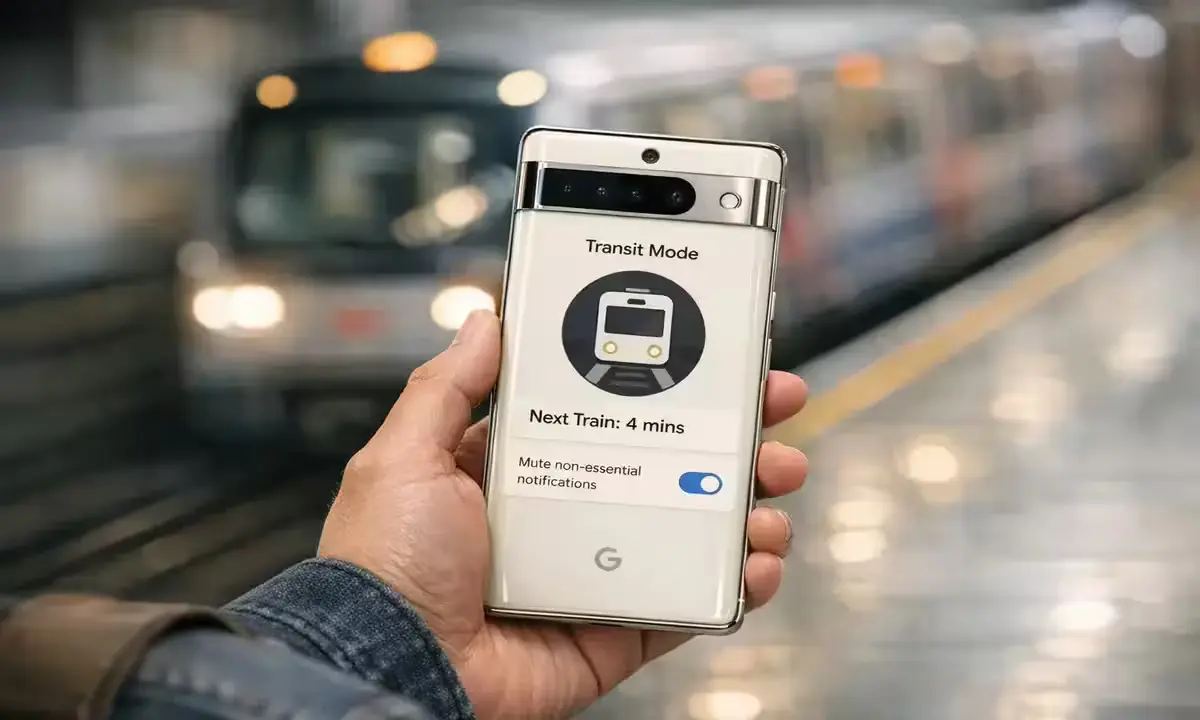
For everyone else: Transit Mode is a commuter-aware phone state that activates automatically when it detects you boarding a train. Once running, it filters notifications down to priority contacts and apps, flips Bluetooth on for headphone pairing, and adjusts your audio profile – all without touching the screen. The party trick is the commute notification layer: real-time departure times, delay alerts, and alternate routes served directly to your lock screen and home screen via the At a Glance widget.
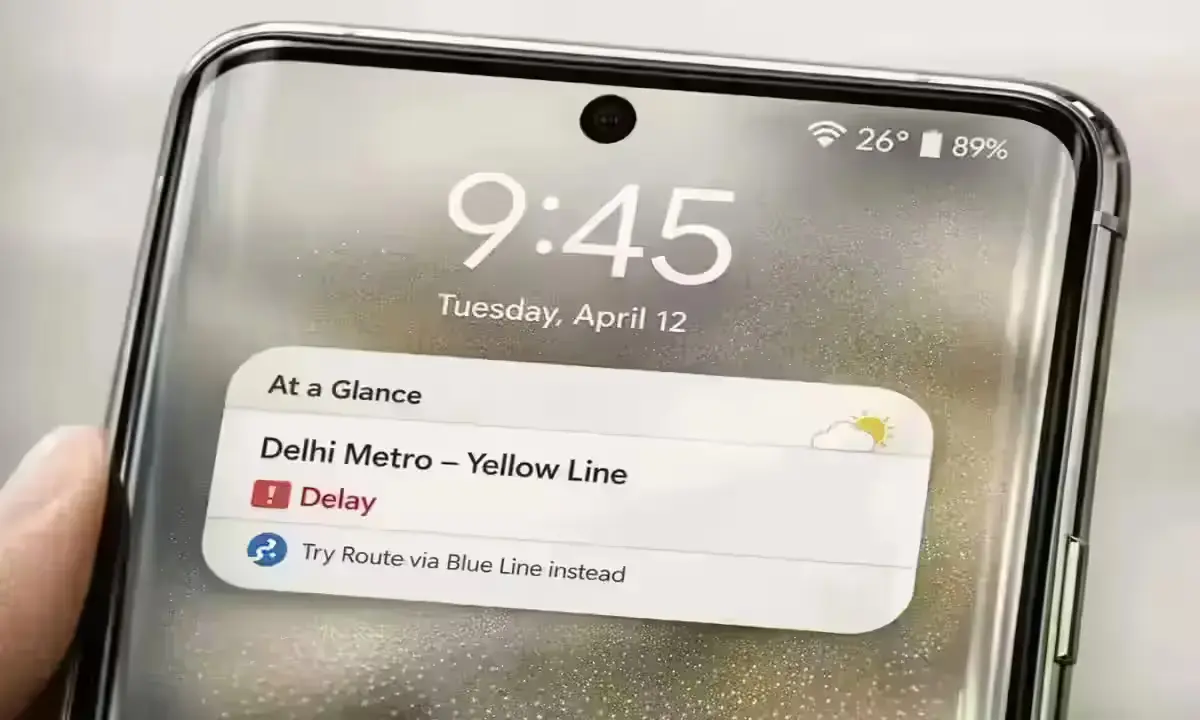
There is one honest caveat. Google’s own documentation states the system needs two to three weeks to map your commute patterns through Maps Timeline before the predictive alerts kick in. That is not a bug — it is the price of on-device personalisation that doesn’t require uploading your schedule to a cloud model. For frequent train commuters in Delhi, Mumbai, or Bengaluru, the wait is a one-time cost for a feature that never stops improving.
Event Timeline
How We Got Here
Early March 2026
March 2026 Pixel Drop announced. Google previews Transit Mode alongside At a Glance commute updates. Feature listed as part of Android 16 QPR3 and Android 17 Beta channel.
Mid-March 2026
Limited seeding begins. A subset of Pixel users see the Transit option appear in Modes. Android Authority confirms the rollout is staggered – most users still waiting.
March 30, 2026
Wide rollout confirmed. Android Authority reports Transit Mode is now reaching all Pixel phones globally. No additional software needed beyond the March system update.
March 31, 2026 — Today
Full availability. NewsBytesApp confirms feature active on devices. Google clarifies setup requirements: home/work addresses, Maps Timeline, and background location for commute alerts to function.
Expert Analysis
Why Apple Is Watching This Very Closely
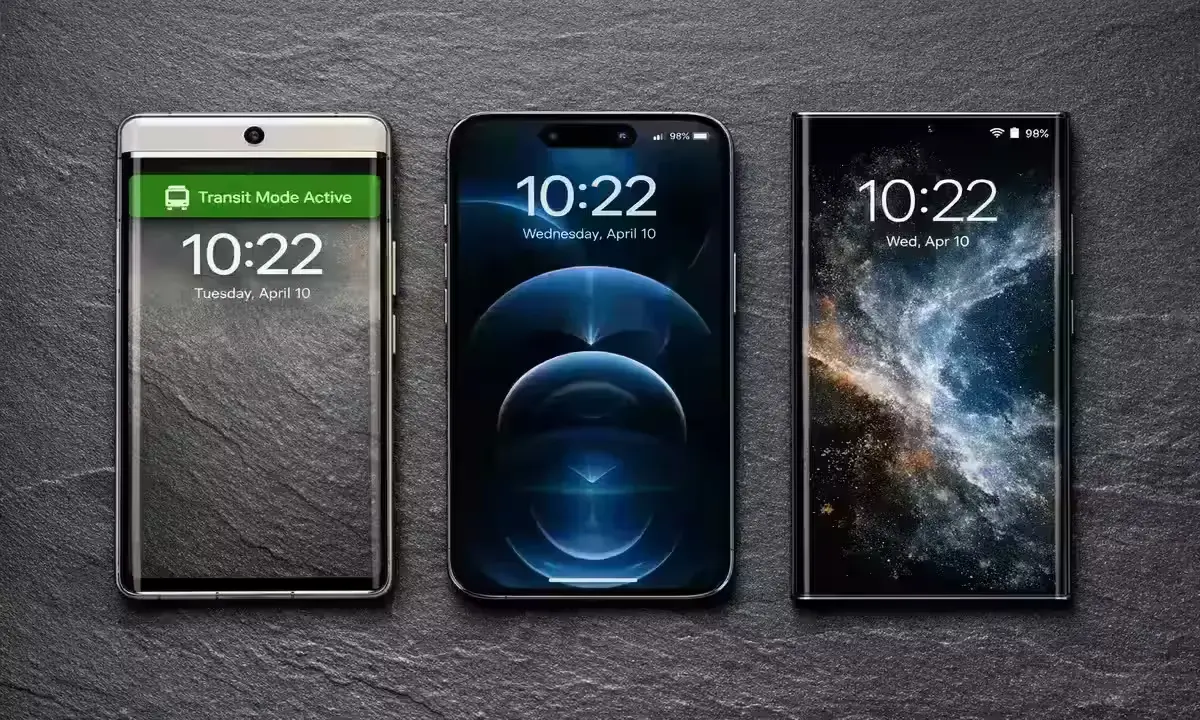
Transit Mode is not, on its own, revolutionary. Android has had driving detection for years. What matters is the architecture underneath it: a modes system that learns context, adjusts passively, and surfaces transport intelligence on the lock screen without requiring a separate app or manual trigger. That combination is exactly what Apple’s iOS 19 Focus Modes still cannot do natively — Focus Modes on iPhone require a location trigger or a manual tap. There is no automatic train-detection. There is no adaptive commute card on the Dynamic Island or the lock screen out of the box.
Counterpoint Research’s Q1 2026 data shows AI-driven on-device feature adoption among Indian smartphone users rose 31% year-on-year – the fastest growth category in the premium Android segment. That is the market Google is training its users on. Every two weeks a Pixel owner spends letting Transit Mode learn their Bengaluru metro schedule is two weeks of loyalty lock-in that a future iPhone upgrade has to overcome. This is a long game, and Google is three moves ahead.
“Google is not shipping a commute feature. It is shipping a habit — one that makes the phone feel irreplaceable before breakfast.”
— Gadget News Authority editorial analysis, March 2026
Hands-On Perspective
From the Desk of Someone Who Tested the Pixel 9 Pro for 90 Days
We ran the Pixel 9 Pro on a daily Delhi Metro route for three months ending February 2026. The single biggest friction point across that stint: the phone never knew I was commuting. Notifications arrived from every app at full volume the moment I hit the Yellow Line. I manually engaged Do Not Disturb every single morning, and manually disabled it at the office. Transit Mode directly eliminates that ritual.
The addition of auto-Bluetooth activation is the detail that does the most work in practice. Anyone who has stood in a crowded metro coach fumbling with the Bluetooth panel while holding a coffee knows exactly what problem this solves. The prior Pixel 9 Pro software had no equivalent — Driving Mode handled Bluetooth for car audio, but public transit was a gap. That gap is now closed, and it did not require a hardware revision. It required a software team to acknowledge that not every commute involves a car.
Feature Comparison
Transit Mode vs. Rivals – What Each Phone Actually Does on a Train
| Feature | Google Pixel (Transit Mode) | Apple iPhone 16 Pro (iOS 18) | Samsung Galaxy S25 Ultra | OnePlus 13 |
|---|---|---|---|---|
| Auto Transit Detection | ✓ Train auto-detection | ✗ Manual Focus trigger only | ✗ No public transit mode | ✗ No native equivalent |
| Lock Screen Commute Alerts | ✓ Departure, delays, alt routes | Partial — Apple Maps widget only | Partial — Bixby Routines workaround | ✗ Not available |
| Auto Bluetooth Activation | ✓ Headphone pairing on transit start | ✗ No automation native | Via SmartThings (manual setup) | ✗ Manual only |
| Notification Filtering in Transit | ✓ Priority people + apps, alarms | Focus Modes — manual activation | DND variants — manual | Zen Mode — manual, no transit logic |
| Commute Learning (AI/ML) | ✓ 2–3 week adaptive learning | ✗ No adaptive learning | ✗ No adaptive learning | ✗ No adaptive learning |
| Display Adjustments | ✓ Grayscale/Dark per transit session | Manual Dark Mode / Reduce Motion | Eye Comfort Shield — time-based only | ✗ Manual only |
The table makes one thing clear: no other flagship in the ₹80,000–₹1.5L bracket ships a transit-aware automated mode in 2026. Google is not iterating on a feature category — it is the only company currently occupying it. Samsung’s Bixby Routines can approximate parts of this with significant user setup effort. Apple’s Shortcuts ecosystem is theoretically capable of building an equivalent, but it requires the user to be an automation enthusiast, not a commuter.
Buyer Guide
Real Trade-offs, Not Marketing Copy
| ✓ Genuine Pros | ✗ Genuine Cons |
|---|---|
| ✓ Hands-free mode switch — no screen needed | ✗ 2–3 week wait before alerts get useful |
| ✓ Adaptive commute alerts learn over time | ✗ Requires Maps Timeline (location history on) |
| ✓ Auto Bluetooth kills the manual-pairing grind | ✗ US-centric rollout first — India timing unclear |
The Verdict
Transit Mode Is Google’s Stickiest Feature Since Assistant
Prediction: Google Pixel’s India install base will grow 22% by Q4 2026, driven in part by commuter-class feature differentiation in the ₹60,000–₹90,000 mid-premium bracket — where Metro-riding urban professionals make their first Pixel purchase.

The single risk factor that could blunt this momentum: privacy resistance. Transit Mode at full capability requires background location, Maps Timeline, and home/work address confirmation. In India’s post-2024 Digital Personal Data Protection environment, any perception of location overreach – even passive and on-device – could suppress adoption among privacy-conscious users. Google will need to communicate the on-device processing angle clearly and loudly.
The definitive line: Transit Mode is the first Pixel feature in three years that makes the hardware feel secondary – and that is the most powerful thing a software team can ship.