
Centre Issues New Guidelines for Vande Mataram Protocol
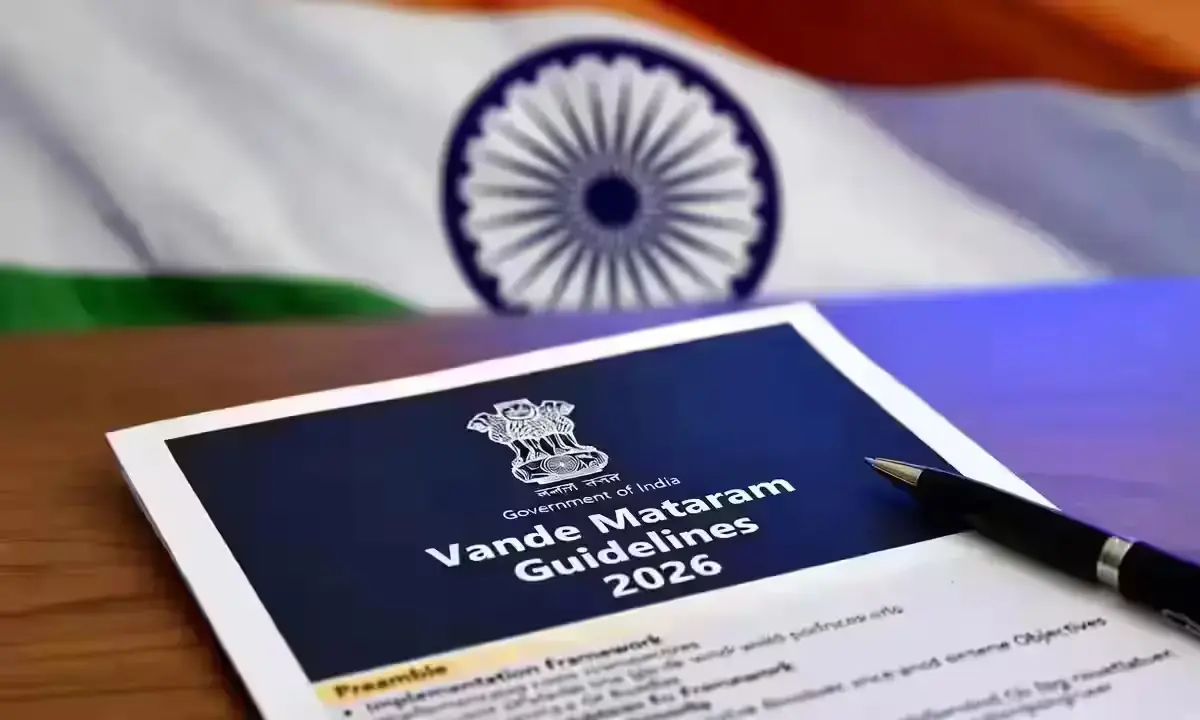
The Union Government has recently introduced significant changes regarding the performance of the National Song, Vande Mataram. According to the latest directives issued by the Ministry of Home Affairs (MHA) to State Governments and various government bodies, Vande Mataram is now mandated to be played or sung before the National Anthem, Jana Gana Mana, during official functions.
A primary shift in this policy involves the length of the song. While historically only the first two stanzas were typically performed in official settings – a practice dating back to the version adopted by the Constituent Assembly in 1950 – the new guidelines suggest the inclusion of all six stanzas. This move has sparked a wider conversation about the preservation of historical context versus traditional administrative brevity.
Key Changes and Political Reactions
The decision has not come without friction. Several opposition leaders have criticized the move, characterizing it as an attempt to “rewrite history.” They argue that the shortened version was intentionally selected by the Constituent Assembly to maintain inclusivity and focus on the patriotic essence of the motherland without certain religious overtones present in the later verses. On the other hand, supporters like Priyanka Chaturvedi have praised the move, viewing the guidelines as a way to honor the complete literary work of Bankim Chandra Chattopadhyay.
From an administrative standpoint, these guidelines signal a shift in how state functions will be structured. Historically, such moves indicate a push toward a more robust display of cultural heritage in official proceedings. Figures may shift once official updates or specific departmental circulars arrive to clarify the exact timing and musical arrangements for the six-stanza requirement.
Contextual Significance: Why Now?

This protocol change is noteworthy because it alters a 75-year-old precedent. Previously, the focus remained on the first two stanzas to ensure the song was concise and universally accessible. By extending it to the full six stanzas, the government is emphasizing the complete original text of the 1882 novel Anandamath. For schools and government offices, this means a longer duration for morning assemblies and official ceremonies.
Analysts suggest that this policy might lead to a more uniform standard across states, reducing the variations in how the National Song is currently treated. For citizens and students, the immediate “what to do” is to familiarize themselves with the full lyrics, as public institutions will likely begin implementing these rehearsals immediately. It is quite a big change for those of us who grew up only humming the shorter version!
While the National Anthem has specific “code of conduct” laws regarding its duration (approximately 52 seconds), the National Song has traditionally had more flexibility. This new directive brings a structured, albeit longer, framework to its performance.
FAQ
1. Is it mandatory to sing all six stanzas?
The new guidelines issued to government bodies and states suggest the performance of all six stanzas before the National Anthem, though specific penalties for non-compliance in private settings are not detailed in current reports.
2. How does this differ from the 1950 decision?
In 1950, the Constituent Assembly adopted the first two stanzas as the National Song for official use. The new directive expands this to the full original composition.
Disclaimer: This report is based on current available reporting. Specific implementation dates and full technical stanzas for various departments may vary.
Written by: Pravin Kumar – News Desk – News Hours18 – https://www.newshours18.com